
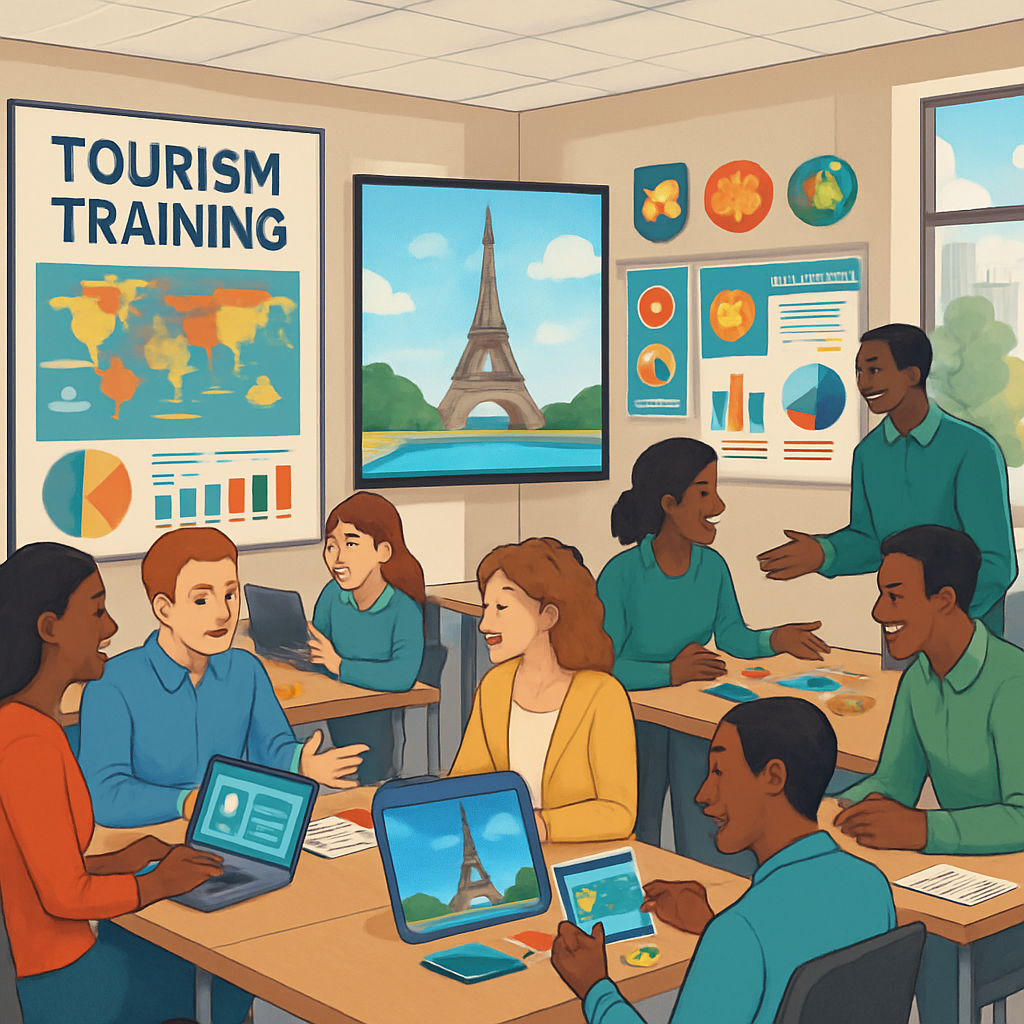
9 Knowledge Retention Techniques That Actually Work in Tourism Training
Tourism learners are busy people. Community members are juggling jobs and family. Frontline staff are managing guests in real time. Travel advisors and tour operators are balancing sales targets, client expectations, and ever-changing destinations.
Tourism training doesn’t fail because the content is bad. It fails when learners can’t remember—or confidently apply—what they learned once they return to the real world.
Knowledge retention is where effective tourism training either shines or quietly disappears.
Here are nine proven knowledge retention techniques, reimagined specifically for tourism training across various audiences—from residents and destination staff to travel professionals worldwide.
1. Start With Audience Research, Not Assumptions
Tourism training audiences are not interchangeable.
Community members need pride, context, and clarity about the value of tourism. Destination staff need consistency, tools, and service confidence. Travel professionals need selling points, itineraries, and practical insight.
Audience research helps you avoid teaching what people already know—or worse, what they don’t care about. Surveys, interviews, and short pre-assessments reveal:
-
Existing destination knowledge
-
Misconceptions about tourism’s impact
-
Skill gaps that actually affect visitor experiences
When training respects learners’ starting points, retention improves because the brain isn’t overloaded with irrelevant information.
2. Use Optional Self-Assessments to Build Confidence, Not Compliance
Mandatory quizzes trigger resistance. Optional self-assessments build trust.
In tourism training, self-assessments work best when framed as:
-
“How confident do you feel recommending this experience?”
-
“Which visitor questions are hardest to answer?”
-
“Where would you send a visitor with these interests?”
For community members and staff, self-reflection reinforces local knowledge. For travel professionals, it helps convert information into selling language. Retention increases because learners actively process information instead of passively clicking through.
3. Build a Microlearning Library for Real-World Moments
Tourism learning happens in short bursts—between shifts, before client calls, or during downtime.
Microlearning is effective because it mirrors the way tourism professionals actually work. A well-designed library might include:
-
3-minute destination refreshers
-
Short videos on accessibility, seasonality, or neighborhoods
-
Quick “who this destination is for” guides
Breaking complex destinations into small, usable pieces makes information easier to retrieve when it matters most—during a visitor interaction or sales conversation.
4. Use Visual Summaries to Anchor Destination Memory
Destinations are visual by nature. Training should be too.
Maps, infographics, itineraries, and experience clusters help learners form mental shortcuts:
-
This neighborhood equals food and culture
-
This season equals outdoor adventure
-
This visitor type equals these experiences
Visual summaries help learners connect new information to what they already know, strengthening long-term recall. For tourism, visuals aren’t decoration—they’re memory anchors.
5. Apply Gamification With Purpose, Not Gimmicks
Games work when they reinforce meaning.
In tourism training, gamification might include:
-
Badges for destination mastery
-
Scenario-based challenges (“Where would you send this traveler?”)
-
Friendly competitions between departments or partner groups
For community programs, gamification boosts engagement and pride. For staff and travel professionals, it encourages repetition without boredom—both of which are essential for retention.
6. Reinforce Learning Through Spaced Repetition
Tourism knowledge isn’t absorbed in one sitting. It sticks through repetition over time.
Spaced repetition works when learners:
-
First explore a destination concept
-
Later see it applied in a scenario
-
Then revisit it through a different format
For example, a destination story might appear first in a video, later in a quiz, and again in a selling tip or case study. Each pass strengthens memory while avoiding overload.
7. Design for Mobile Because Tourism Happens Everywhere
Tourism professionals are rarely at desks. Community members often learn on phones. Travel advisors work across devices.
Mobile-friendly training ensures:
-
Content is readable, navigable, and quick
-
Learning fits into real schedules
-
Knowledge is accessible at the moment of need
When tourism training works on mobile, retention improves because learning happens closer to real-world application.
8. Encourage Learner-Generated Content to Deepen Understanding
Teaching something forces clarity.
In tourism training, learner-generated content might include:
-
Community members sharing favorite hidden gems
-
Staff creating response scripts for common visitor questions
-
Travel advisors building sample itineraries
Creating content requires comprehension, reflection, and recall—three ingredients that lock knowledge into long-term memory.
9. Support Learning Through Mentorship and Peer Exchange
Tourism is relational by nature. Learning should be too.
Mentorship and peer discussion help learners:
-
Compare experiences
-
Fill knowledge gaps
-
Reinforce understanding through conversation
Whether through formal mentoring, discussion boards, or facilitated cohorts, shared learning improves retention because people remember what they talk about—and teach others.
Why Retention Matters in Tourism Training
When tourism learners remember what they learn, destinations benefit:
-
Visitors receive better recommendations
-
Communities feel more connected and informed
-
Travel professionals sell with confidence and accuracy
Retention turns training into behavior. Behavior shapes experiences. Experiences shape reputations.
That’s the real work of tourism education.

About Learn Tourism the nonprofit academy…
Learn Tourism is a 501c3 nonprofit organization dedicated to advancing the tourism industry through innovative educational practices and professional development initiatives. Our mission is to harness the power of science, business psychology, and adult education to build sustainable economies and enrich the tourism landscape. Visit us at learntourism.org.