
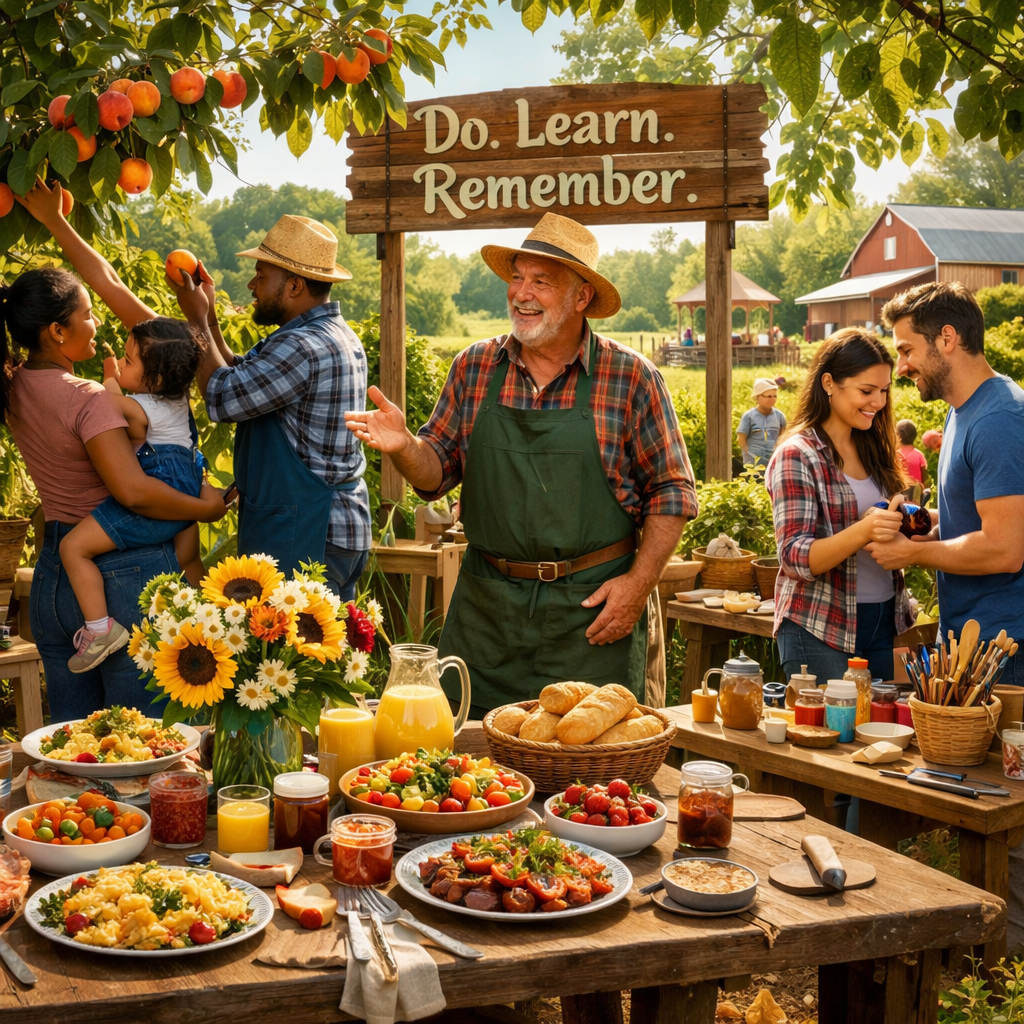
Do. Learn. Remember. — A practical framework for product development in tourism
Do. Learn. Remember. — A practical framework for product development in tourism
By Stephen Ekstrom, CEO & Cofounder — Learn Tourism
“Your ordinary is somebody else’s extraordinary.” Joanne Wolnik, Executive Director of Southwest Ontario Tourism, used that line to cut straight to the heart of product development during a recent conversation on Business Class. It’s a tidy little truth that reshapes how destinations find and design tourism experiences: the most powerful products are often already living in the community — they just need to be noticed, shaped, and shared.
From that idea comes a simple, repeatable design mantra I now use with partners: Do. Learn. Remember. Treat every new product as a tiny learning loop with three parts:
- Do — make it hands-on, sensory, and local;
- Learn — design what the visitor actually does and can do afterward;
- Remember — create a tangible takeaway, a story, or a skill that lives on after the trip.
Below is a practical playbook for turning everyday local life into sustainable tourism products that benefit hosts, visitors, and communities.
1. DO — start with the local act
Great tourism products begin with doing. Think of Alex at River Melons: guests pick fruit, prepare food, then share a farm brunch. Or Dave at Otter Creek Woodworks: visitors build a charcuterie board after learning about the forest and the wood that made it. These are not show-and-tell activities — they’re hands-on practices that pull visitors into the local moment.
How to design the “Do”
- Identify ordinary local practices that are safe, repeatable, and interesting to an outsider.
- Vet hosts for hospitality and safety, and help them document the sequence of activities.
- Keep group sizes manageable so every participant “does” something meaningful.
- Think multisensory: smell, taste, touch and sound anchor memories quickly.
What success looks like
Visitors leave having participated — not merely observed. They’ve done a task, used a tool, tasted a thing, or stepped into a small ritual that belongs to the place.
2. LEARN — design for behavior change
If “Do” is the experience, “Learn” is the outcome. Too many products focus on content. The better question is: what should a visitor be able to do differently when they leave? Joanne and our team at Learn Tourism insist on outcome-driven design: short, active learning goals that match real behaviors.
Principles for the Learn stage
- Define a single behavioral outcome (e.g., “Recommend three local food experiences for rainy days”).
- Use microlearning: 5–15 minute pre- or post-activity modules that prepare people to participate and reinforce skills afterward.
- Teach with empathy: match the mode of learning to who will attend and where they are (on-site, at home, on mobile).
- Assess lightly: quick confidence surveys, skill checks, or short reflections are enough to show impact.
Measure it
Collect two small but powerful metrics:
- A quick “I can do this” confidence score after the experience;
- A follow-up behavioral check — did they actually recommend the activity or use the skill?
3. REMEMBER — build lasting value
Memories are the currency of repeat visitation and word-of-mouth. “Remember” is where you turn a short activity into a lasting change: a tangible artifact, a skill, a micro-story, or a habit the visitor carries home. Joanne’s hosts craft experiences that teach something useful — and leave the visitor with a physical reminder or a new practice.
Ways to make experiences memorable
- Physical takeaways: a charcuterie board, a jar of jam, a recipe card, a simple tool.
- Micro-stories: name the host in the narrative — “Susan at the farm” — so the visitor remembers the person behind the product.
- Practical rituals: teach one small habit (how to season a local fish, how to care for a tool) that becomes a repeatable action at home.
- Shareability: provide a short “story card” or social-ready caption so visitors can tell the micro-story easily.
Why it matters
When visitors remember, they recommend. When they recommend, the local host benefits. When the host benefits, the community invests back into stewardship and regeneration.
A compact product-development checklist — Do. Learn. Remember.
- Spot the ordinary: list 10 local practices people take for granted.
- Choose a host: check hospitality, storytelling ability, and safety.
- Write the outcome: one clear behavior visitors should be able to do after the experience.
- Script the “Do”: step-by-step activity flow (timings, roles, materials).
- Add a microlearning “Learn”: 2–3 short pre/post content pieces.
- Design the takeaway: physical or ritual that cements memory.
- Plan accessibility: time, language, cost, mobility.
- Measure: confidence score + one behavior follow-up.
- Pilot: run with 10–20 guests, collect feedback, iterate.
Final thought
Joanne’s work in Southwest Ontario reminds us that product development is less about invention and more about translation: seeing the extraordinary in the ordinary and packaging it with clear outcomes, empathetic design, and a memorable takeaway. The Do. Learn. Remember. framework keeps the work simple and centered on people — hosts, learners, and communities.
Learn more about how we help destinations design experiences at learntourism.org.
—
Stephen Ekstrom, CEO & Cofounder, Learn Tourism