
English for Tourism, the Course Behind 26,500+ Red Sea Graduates
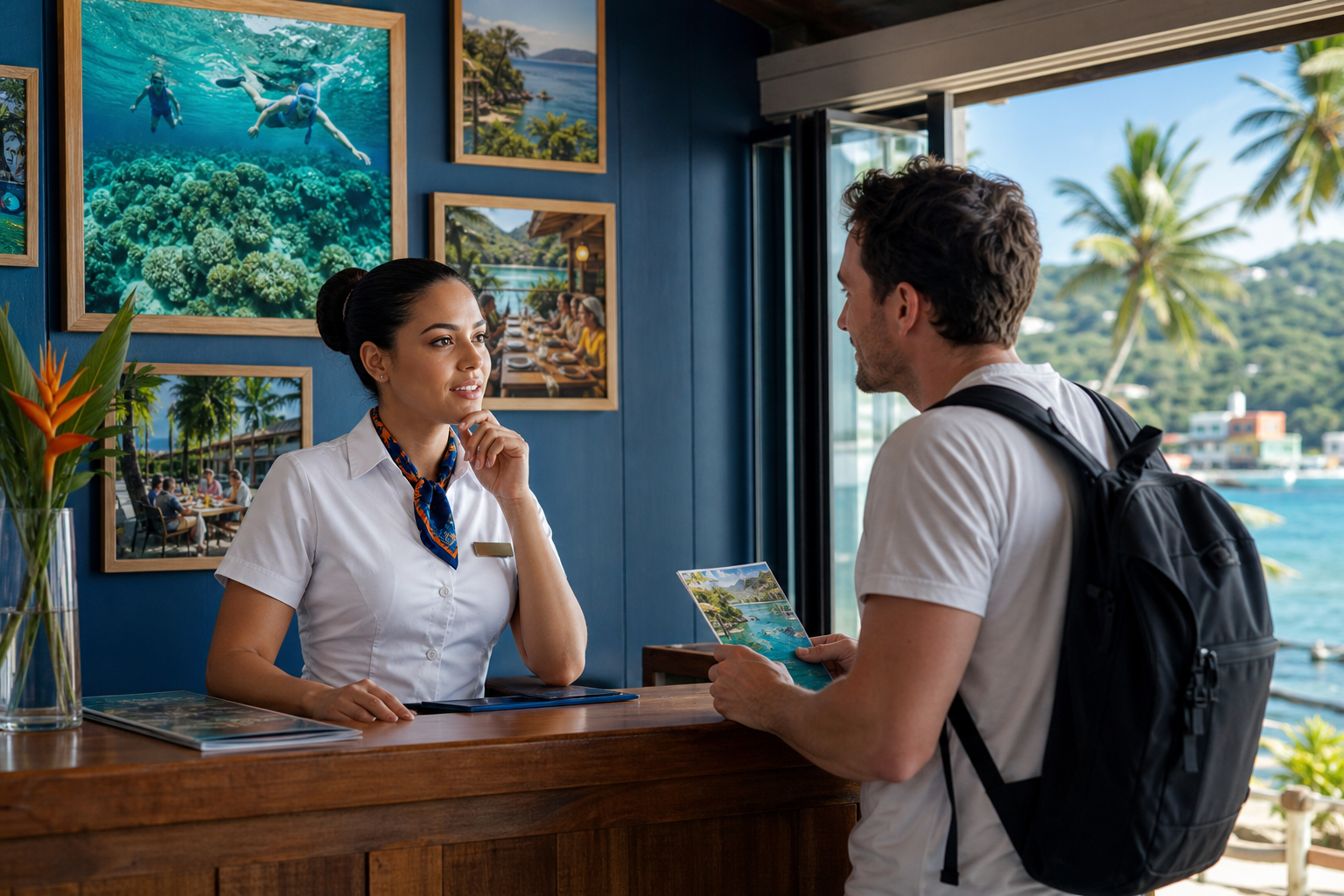
Picture a front desk agent in a coastal town. She knows every snorkel spot, every family-run restaurant, and the best hour to catch the light on the water. A guest from London walks up and asks a simple question, and she freezes. Not because she doesn't know the answer. Because she isn't sure she can say it in English.
That moment happens thousands of times a day in destinations around the world. And every time it does, a visitor misses a great recommendation, a local business misses a sale, and a talented person misses a chance to grow.
So we built a course to fix it. English for Tourism is now available from Learn Tourism, and it's designed for the destinations, employers, and economic development organizations that want their people ready to welcome the world.
What is the English for Tourism course?
English for Tourism is a Learn Tourism course that teaches the practical English frontline tourism and hospitality workers use every day, paired with the cultural awareness and service skills that make international guests feel welcome. It isn't a general language class. Every lesson is built around real tourism situations: greeting guests, giving directions, recommending experiences, solving problems, and handling the unexpected.
The course brings together three strands:
- Core English skills. Vocabulary, grammar, listening, speaking, reading, and writing, taught through the language people actually need on the job.
- Tourism industry focus. Travel terminology, customer service language, and cultural competence for serving visitors from many backgrounds.
- Real-life practice. Role-plays, group discussion, and presentation practice so learners build confidence, not just vocabulary.
It also includes guest speakers from across the tourism industry, so learners hear how professionals talk about travel, culture, and the visitor experience.
Why does English for Tourism matter for destination organizations?
For DMOs, CVBs, and tourism boards, English proficiency on the front line is part of the visitor experience you're promoting. You can run a brilliant international marketing campaign, but the brand promise is kept (or broken) at the hotel desk, the tour boat dock, and the visitor center counter.
Language training helps destination organizations:
- Turn international marketing into international hospitality. The welcome visitors receive should match the welcome you advertise.
- Strengthen partner value. Offering English for Tourism to hotels, attractions, and tour operators is a tangible benefit that supports the businesses you represent.
- Prepare for big moments. Major events, new air routes, and new international markets all raise the stakes for clear, confident communication.
- Practice inclusive hospitality. Every guest deserves to feel expected, including the ones who don't share your first language. Training residents to bridge that gap is a form of destination stewardship.
Why should economic development organizations care?
For economic development organizations, English for Tourism is workforce development with a direct line to jobs and income. Tourism is often one of the most accessible entry points into the workforce, especially in rural and emerging regions. Language is frequently what separates an entry-level role from a promotion.
Economic development agencies, chambers, workforce boards, and government ministries can use the course to:
- Build local talent for local jobs. Prepare residents for roles created by new resorts, attractions, and infrastructure rather than relying on imported labor.
- Open career pathways. English skills help frontline workers move into supervisory, guiding, and guest-facing leadership roles.
- Reach learners where they are. Online, mobile-friendly delivery makes training possible in remote communities where traditional classrooms are costly or impractical.
- Show measurable progress. Completion and progress tracking give funders, boards, and partners clear evidence of impact.
What happened when Red Sea Global used English for Tourism?
Learn Tourism was contracted twice by Red Sea Global to deliver English for Tourism training in Saudi Arabia, and more than 26,500 participants completed the training within two years. Red Sea Global develops sustainable tourism destinations along Saudi Arabia's Red Sea coast as part of the country's Vision 2030 strategy.
The challenge was a familiar one, at a much bigger scale. Many entry-level workers in the region lacked the English proficiency to engage confidently with international visitors, and traditional in-person training was costly, slow, and hard to reach in remote communities.
Working with Red Sea Global and EduGuideKSA, Learn Tourism delivered an online-first, mobile-accessible program that combined:
- Modular lessons with real-time progress tracking
- Live virtual instruction and 500+ breakout study sessions
- Cultural relevance modules and milestone-based certificates
- A live, in-person celebration in Saudi Arabia to honor graduates
More than 600 learners went on to complete advanced-level courses, and employers reported stronger readiness among new hires.
As Red Sea Global's Director of Community Development put it: "Our mission is to build a thriving, inclusive tourism economy, and that begins with people."
That's the part we love most. The program wasn't only about grammar and vocabulary. It was about a trainee who used to be nervous talking to tourists, and a front desk employee who found the confidence to apply for a supervisor role.
Read the full case study: Language Training at Scale: Red Sea Global's English for Tourism Model
How can your destination get started?
You don't need a nationwide initiative to begin. A few practical starting points:
- Map your front line. Where do international visitors interact with your community most often? Visitor centers, hotels, transportation hubs, and attractions are usually the first places to look.
- Start with a pilot group. Enroll a small cohort from two or three partner businesses and track their progress and confidence.
- Partner for reach. Pair your DMO with your local economic development agency, workforce board, or community college. Shared goals make it easier to fund and scale.
- Celebrate graduates publicly. Recognition builds pride, encourages the next cohort, and shows residents that tourism invests in them.
Frequently asked questions
Who is the English for Tourism course for?
Frontline tourism and hospitality workers, plus the organizations that train them: DMOs, CVBs, tourism boards, economic development agencies, chambers, workforce programs, hotels, attractions, and tour operators.
Is English for Tourism a general English class?
No. It focuses on the language, cultural awareness, and service skills used in real tourism situations, like greeting guests, giving recommendations, and solving problems.
Has Learn Tourism delivered English for Tourism at scale?
Yes. Learn Tourism was contracted twice by Red Sea Global in Saudi Arabia, where more than 26,500 participants completed English for Tourism training within two years.
Can English for Tourism be delivered in remote or rural regions?
Yes. The Red Sea Global program was designed online-first and mobile-accessible specifically to reach learners in remote communities.
How does English for Tourism support economic development?
It helps residents qualify for and advance in tourism jobs, supports local hiring for new developments, and gives agencies trackable workforce outcomes.
Learn Tourism helps destinations around the world create learning experiences that are Transformative, Engaging, and Accessible for staff, partners, and entire communities. If you'd like to bring English for Tourism to your destination or region, let's talk.