
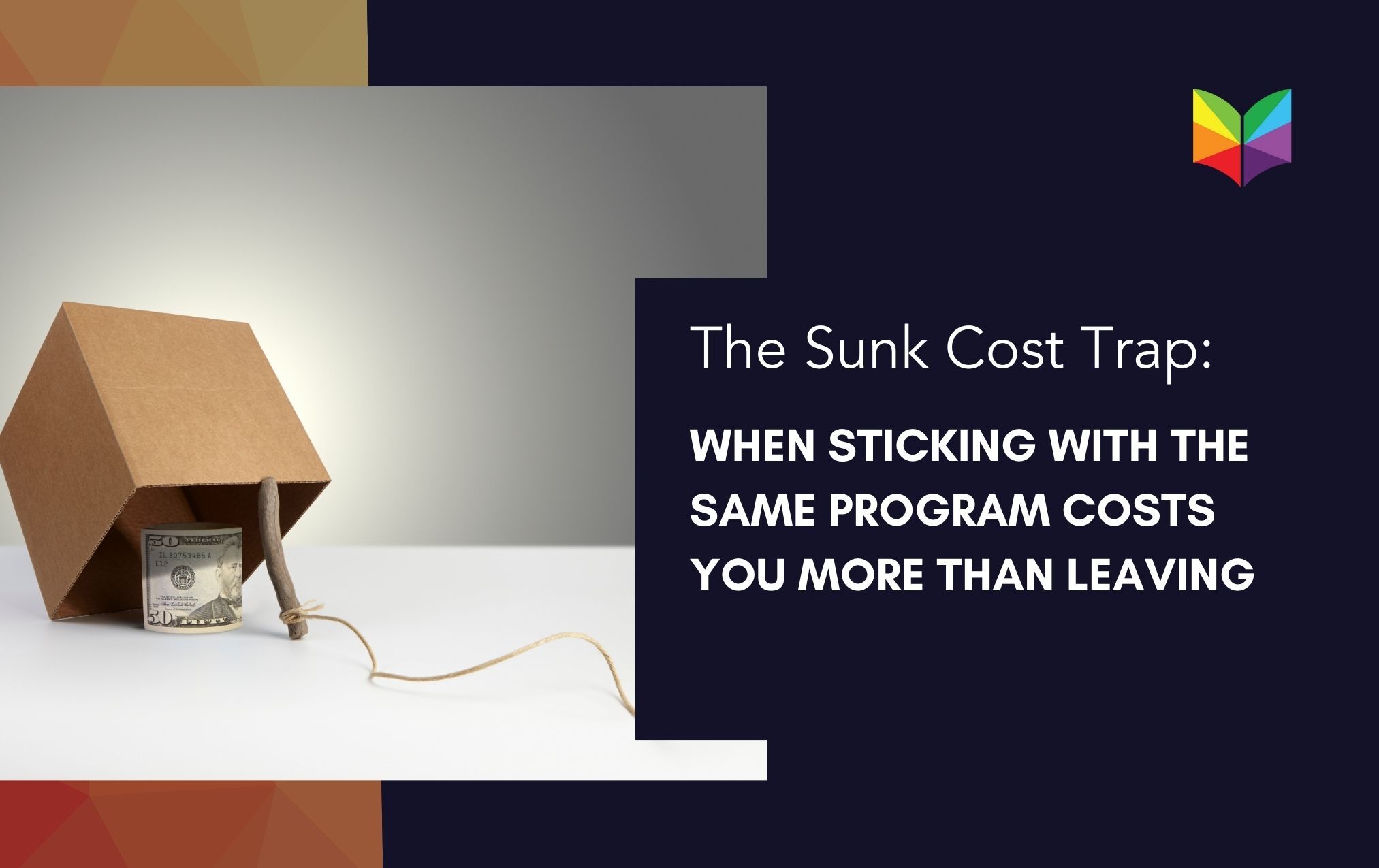
The Sunk Cost Trap: When Sticking With the Same Program Costs You More Than Leaving
Human brains are wonderfully creative, pattern-seeking machines. They’re also stubborn. One of the most persistent mental shortcuts we fall into—especially in tourism organizations, nonprofits, and destination teams—is something economists call the sunk cost fallacy.
The idea is simple and sneaky:
When we’ve already invested time, money, political capital, or emotional energy into something, we feel pressure to keep going… even when the results aren’t there.
In tourism training, workforce development, marketing platforms, and community programs, this issue appears more frequently than we’d like to admit.
What “Sunk Cost” Actually Means (In Plain English)
A sunk cost is an investment that cannot be recovered. The money has been spent. The time is gone. The contracts are signed. The emails were sent. The logo is on the slide deck.
The fallacy occurs when past investments start driving future decisions.
Instead of asking, “What will help us most going forward?”
We quietly ask, “How do we justify what we’ve already spent?”
That’s not a strategy. That’s emotional bookkeeping.
Why Tourism Organizations Are Especially Vulnerable
Tourism leaders tend to be relationship-driven, community-minded, and deeply loyal. Those are strengths. They also make it harder to walk away from things that no longer serve the mission.
Common examples include:
- A training platform that looked great five years ago but hasn’t evolved with adult learning science.
- A tourism ambassador or champion program with low engagement, but strong nostalgia.
- A vendor relationship that feels “safe,” even though the outcomes are stagnant.
- A course library that exists mostly because “we already paid for it.”
None of these is a failure. They’re signals.
READ ALSO: 9 Questions You Should Be Asking When Considering Your Tourism Training Program Partner
The Real Cost Isn’t the Money You Spent
The most expensive part of staying with an underperforming program isn’t the original investment.
It’s the opportunity cost—what you’re not doing instead.
When a program isn’t keeping up, the hidden costs start stacking:
- Staff disengagement from outdated or irrelevant training
- Frontline workers who complete courses but change no behaviors
- Community members who stop enrolling because nothing feels new
- Leadership teams are stuck explaining low participation year after year
At that point, staying the course isn’t “being fiscally responsible.”
It’s quietly draining momentum.
Switching Things Up Is Not an Admission of Failure
This is where nonprofit and public-sector leaders deserve more understanding and compassion.
Changing direction doesn’t mean the original idea was bad. It means the environment changed—and you noticed.
Adult learning research consistently shows that relevance, autonomy, and feedback are the key factors that keep learners engaged. Programs that don’t evolve with those principles lose effectiveness, no matter how well-intentioned they were at launch.
Strong leaders don’t cling to systems.
They stay loyal to outcomes.
Questions Worth Asking Before You Renew (Again)
Instead of asking, “Have we invested too much to stop now?”
Try asking:
- Is this program still aligned with our current goals and the needs of our audience?
- Would we choose this solution again if we were starting today?
- Are we seeing measurable changes in knowledge, confidence, or behavior?
- Does this platform or program grow with us—or lock us in place?
If those answers feel uncomfortable, that’s not a warning sign. That’s clarity arriving.
What Healthy Change Actually Looks Like
Switching things up doesn’t have to mean burning everything down.
Sometimes it means:
- Updating content without rebuilding from scratch
- Choosing flexibility over “all-in-one” promises
- Designing modular learning instead of static courses
- Prioritizing analytics and insight over vanity metrics
- Putting learner experience ahead of internal convenience
At Learn Tourism, we often work with partners who didn’t need more training—they needed better alignment between learning, outcomes, and reality on the ground.
And yes, many of them had already invested heavily elsewhere.
Letting Go Is a Strategic Skill
The sunk cost fallacy thrives on guilt.
Effective leadership is built on evidence, curiosity, and adaptability.
Tourism is dynamic. Communities change. Learners evolve. Technology advances. Training programs should do the same.
The smartest move isn’t sticking with what you’ve already paid for.
It’s investing in what actually moves your mission forward—now.

About Learn Tourism the nonprofit academy…
Learn Tourism is a 501c3 nonprofit organization dedicated to advancing the tourism industry through innovative educational practices and professional development initiatives. Our mission is to harness the power of science, business psychology, and adult education to build sustainable economies and enrich the tourism landscape. Visit us at learntourism.org