
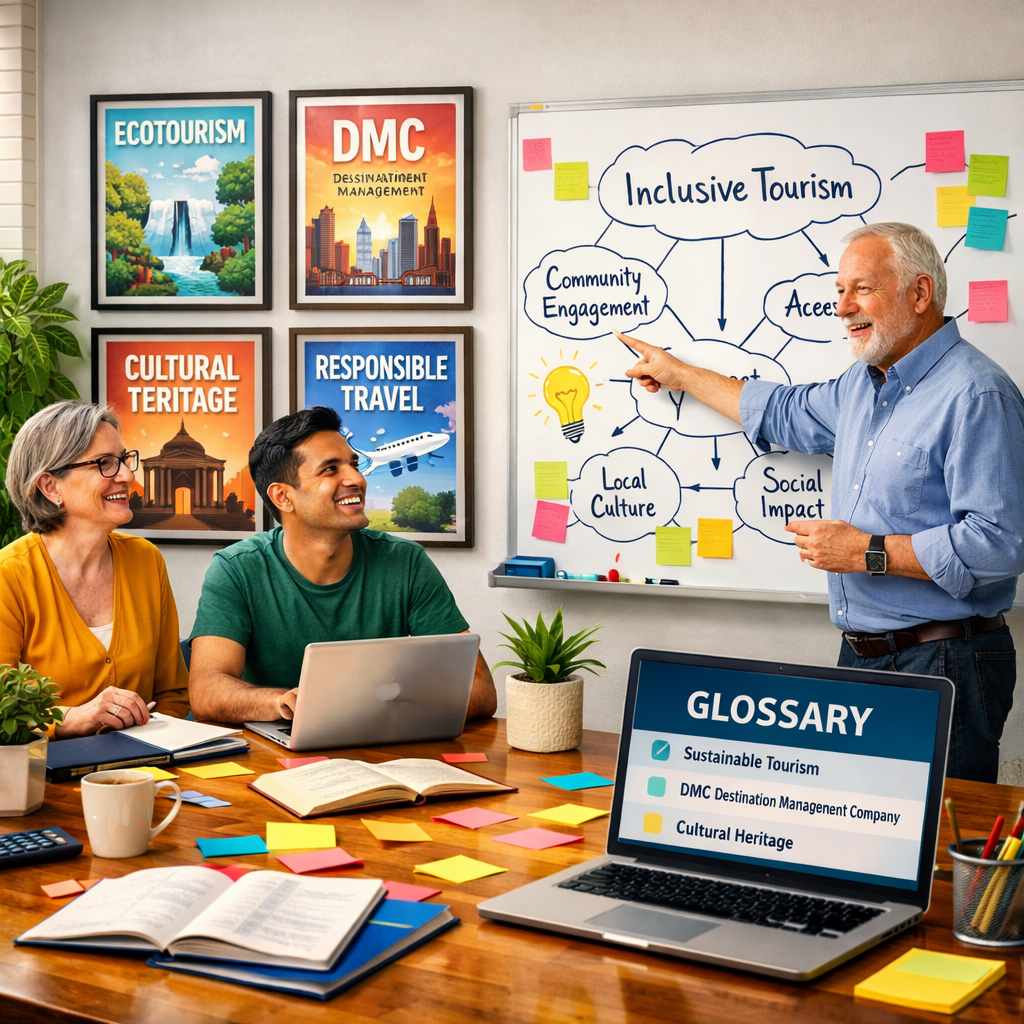
We Updated Our Glossary of Tourism Industry Terms
We Updated Our Glossary of Tourism Industry Terms
Tourism language changes as the industry changes. New tools, new traveler expectations, new workforce challenges, and new community priorities all shape the way tourism professionals talk about their work.
That is why Learn Tourism recently updated our Glossary of Tourism Industry Terms, a practical resource designed to help tourism professionals, destination leaders, educators, frontline teams, and community stakeholders build a shared understanding of the words shaping our industry. The glossary already included foundational terms such as DMO, CVB, TID, TOT, MICE, FAM Tour, OTA, RevPAR, and Learning Experience Platform.
This latest update expands the glossary beyond traditional tourism, hospitality, and travel trade vocabulary to include the language of workforce development, destination stewardship, accessibility, community engagement, responsible technology, and modern learning.
Why We Updated the Glossary
Tourism is no longer only about attracting visitors. It is also about preparing communities, supporting workers, building trust, strengthening local economies, and creating experiences that are welcoming, inclusive, and sustainable.
Our own work increasingly sits at the intersection of tourism workforce development, destination engagement, and leadership education, which are also core themes in our internal thought leadership strategy. The updated glossary reflects that broader view of the visitor economy.
The goal is simple: make tourism terminology easier to understand, easier to teach, and easier to apply.
Significant New Terms Added
Workforce Reinvention
Traditional workforce development focuses on preparing people for current roles. Workforce reinvention goes further. It asks how roles, skills, training, and organizational practices must evolve as tourism changes.
This term matters because artificial intelligence, automation, and digital platforms are reshaping how travelers discover, book, experience, and share journeys. Learn Tourism’s workforce reinvention work frames this shift as a human challenge, not just a technology challenge.
Destination Stewardship
Destination stewardship describes a more balanced approach to tourism leadership. It considers visitor needs, resident quality of life, environmental responsibility, cultural preservation, and long-term economic benefit.
This phrase is important because more destinations are moving beyond promotion alone. They are asking how tourism can serve the community, not just bring people to it.
Visitor & Resident Engagement
Tourism works best when visitors and residents both feel considered. Visitor and resident engagement refers to strategies that build understanding, pride, support, and shared benefit between those who live in a place and those who come to experience it.
Learn Tourism has identified visitor and resident engagement as a key area for future industry insights and research-driven content.
Community-Based Learning
Community-based learning uses local knowledge, peer sharing, storytelling, and real-world experience to build skills and strengthen destination outcomes.
This term reflects an important shift in tourism education: expertise does not only come from outside consultants or formal courses. It also lives in the stories, experiences, and practices of people who know the destination best. Learn Tourism’s workforce content highlights community-based learning through peer knowledge sharing, storytelling, and best practices.
Accessibility
Accessibility is the practice of designing tourism experiences, training, spaces, websites, and services so people with disabilities and differing needs can participate fully and independently.
This addition is especially important because accessibility is not a niche issue. It is central to hospitality, visitor experience, workforce training, and community inclusion. Learn Tourism’s published content includes educational accessibility for tourism training, reinforcing its importance across the industry.
Inclusive Tourism
Inclusive tourism means welcoming and serving people of all backgrounds, abilities, identities, ages, and needs.
While the original glossary included “Inclusive Package,” the updated version adds inclusive tourism as a broader concept tied to access, belonging, representation, and visitor experience.
Responsible AI
Responsible AI refers to the ethical and transparent use of artificial intelligence in ways that reduce harm, protect privacy, address bias, and maintain human trust.
This term is becoming more important as destinations and tourism businesses experiment with AI for marketing, service, training, content creation, and data analysis. Learn Tourism’s workforce reinvention guide identifies governance, trust, ethical guidelines, data privacy, and accountability as essential issues for AI adoption in tourism.
Data Privacy
Data privacy is the protection of personal or organizational information collected through tourism, marketing, booking, training, or digital platforms.
Tourism organizations collect more data than ever before. That creates opportunities for better personalization and decision-making, but it also creates responsibility. Trust is a core part of tourism, and data privacy helps protect that trust.
Learning Experience Design
Learning experience design is the intentional design of learning that is engaging, accessible, practical, and aligned with learner needs and organizational goals.
This term matters because tourism training should not simply deliver information. It should help people build confidence, apply skills, and improve real-world experiences.
Personalized Learning Pathways
Personalized learning pathways are customized sequences of learning activities based on a learner’s role, goals, performance, interests, or needs.
This phrase reflects the future of tourism training. A hotel front desk worker, a volunteer, a restaurant server, a tour guide, and a destination executive may all need different learning experiences. Learn Tourism’s workforce content identifies personalized learning pathways as part of role-based skill development and adaptive content.
Service vs. Hospitality
Service is the technical delivery of a task. Hospitality is the emotional experience created through care, attentiveness, and human connection.
This distinction is especially useful for frontline teams, visitor services professionals, and destination training programs. Learn Tourism’s reflections on hospitality emphasize that extraordinary hospitality is rooted in intentionality, emotional connection, attentiveness, and generosity.
Authentic Visitor Experience
An authentic visitor experience reflects the real culture, stories, people, and sense of place of a destination.
This term supports a more thoughtful approach to tourism development. Visitors increasingly want meaningful experiences, while communities want tourism that respects and reflects who they are. Learn Tourism’s training resources include “Creating Authentic Visitor Experiences” as a key topic.
Pride of Place
Pride of place is the positive emotional connection residents, workers, and stakeholders feel toward their community or destination.
This phrase is especially valuable for tourism ambassador, community advocate, and frontline training programs. When people feel proud of where they live and work, they are more likely to share meaningful stories, offer warm welcomes, and support tourism’s role in the community.
A Glossary for a Changing Industry
The updated glossary is more than a list of definitions. It is a reflection of where tourism is heading.
The industry still needs to understand room blocks, familiarization tours, bed taxes, receptive operators, and trade shows. Those terms remain important. But today’s tourism professionals also need language for AI governance, community impact, inclusive tourism, destination readiness, workforce reinvention, and human-centered experiences.
Shared language helps teams work together. It helps residents understand tourism’s role. It helps frontline workers see themselves as part of the visitor economy. It helps destination leaders explain complex ideas clearly and confidently.
Most importantly, it helps us keep learning.
About Learn Tourism
Learn Tourism is a nonprofit education partner helping tourism organizations build more informed, engaged, and welcoming communities.
- We design custom online and live learning programs for destinations, associations, and tourism organizations.
- We help train frontline workers, residents, partners, and travel professionals.
- We create accessible, engaging courses rooted in adult learning, business psychology, and tourism expertise.
- We support workforce development, destination engagement, visitor experience, and community pride.
- We make tourism education easier to launch, manage, update, and measure.
Explore more resources at learntourism.org.