
Beyond the Recycling Bin: 5 Ways to Get Your Tourism Team Behind Your Sustainability Goals
"Can I put a stapled document in the recycling bin?"
That's the question Katie Ryan uses to open a recent Trellis article on engaging employees in sustainability goals. Her point: too many workplace sustainability programs look like elementary school projects. Recycling reminders. Reusable cup giveaways. Nice, but disconnected from the goals that really move the needle.
Ryan wrote for corporate sustainability teams. But if you work at a DMO, a CVB, a hotel, or an attraction, you've probably seen the tourism version. A "green team" that meets quarterly. A stewardship pledge on the website. A sustainability slide in the annual meeting deck that nobody on the front desk has ever seen.
Meanwhile, the people who shape a visitor's experience every day (sales managers, visitor center staff, housekeepers, guides, event planners) aren't sure what the destination's stewardship goals are, or what those goals have to do with their jobs.
The appetite is there. Ryan cites research from consultancy Kite Insights finding that more than 80 percent of employees want to act on climate change at work. The gap isn't willingness. It's connection.
Here are Ryan's five ideas, translated for tourism.
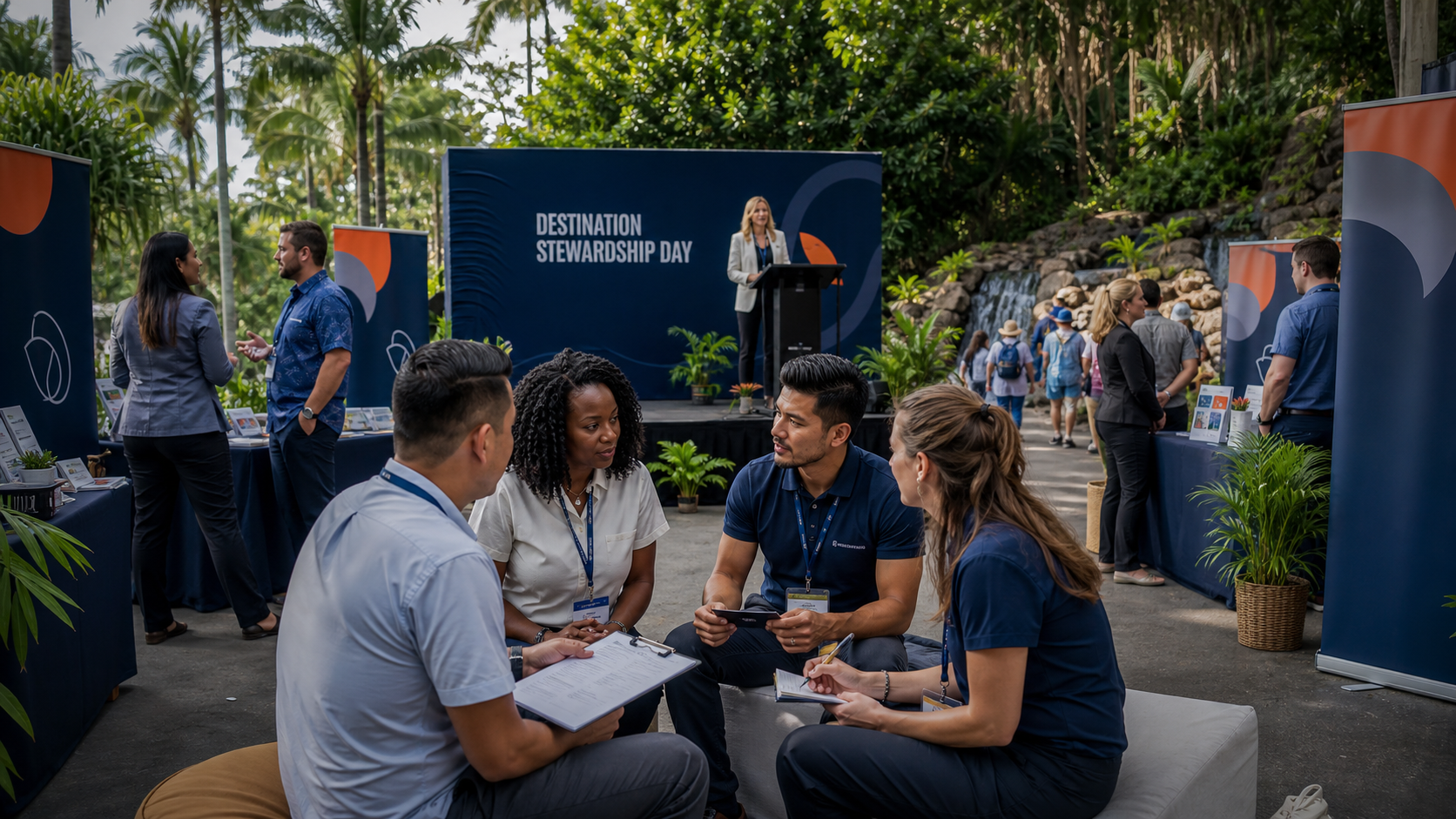
1. Give stewardship its own day
Ryan recommends a focused annual sustainability event, a single day when the topic gets everyone's full attention, at every level of the organization.
For destinations, this is a natural fit. We already know how to host events. Turn that skill inward.
What it could look like:
- A Destination Stewardship Day for your staff, board, and key partners. Anchor it to a moment that already matters to the industry, like World Tourism Day (September 27) or National Travel and Tourism Week in May.
- Invite people who don't usually attend sustainability meetings: hotel general managers, restaurant owners, attraction operators, frontline staff, and residents.
- Make it active. Swap the panel of experts for a walking tour of a stewardship project, a resident listening session, or small-group problem solving on a real destination challenge.
Try it: Pick a date in the next 12 months and put a placeholder on the calendar. The rest gets easier once it exists.
2. Bring the CEO (and the board chair) into the room
Ryan's second idea: host the event where leadership can show up, deliver opening remarks, and stay for an honest conversation.
She shares a story of a logistics CEO who told employees, candidly, that the company pursued sustainability because customers and investors expected it. As Ryan writes, "That's the kind of statement you can't script, but it can only happen if you create the space for it."
Tourism leaders have their own candid "why," and it's often more persuasive than a values statement:
- Resident support affects whether tourism can grow at all.
- Meeting planners and travel advisors are asking harder questions about sustainability in RFPs and site visits.
- The natural and cultural assets we promote are the product. Damage them and there's nothing left to market.
Try it: Ask your president, CEO, or board chair to spend 20 minutes answering one question in front of the team: "Why does stewardship matter to our destination's future?" No slides. Then open the floor.
3. Write stewardship into everyone's goals
In the corporate world, Ryan recommends tying sustainability goals to compensation through a company scorecard or team KPI. She highlights Hannah Black of Trane Technologies, who built a goal guide tailored to each function. The result, as reported in the article: 20 percent more goals that met SMART criteria (Specific, Measurable, Achievable, Realistic, Timely).
Many DMOs and tourism nonprofits don't have bonus structures to adjust. That's fine. The lesson isn't really about pay. It's about making stewardship part of each person's actual job, in language that fits their role.
A starter goal guide for a destination organization:
| Team | What a stewardship goal might look like |
|---|---|
| Sales and meetings | Include locally owned venues, caterers, and suppliers in every group proposal |
| Marketing and communications | Feature a set number of locally owned businesses or responsible-travel tips each quarter |
| Visitor services | Every team member can confidently answer, "How can I visit here responsibly?" |
| Partnerships and membership | Share one stewardship resource or training with partners each quarter |
| Leadership | Report stewardship progress to the board at every meeting |
Try it: At your next round of performance check-ins, ask each team member to draft one stewardship goal for their role. Then make it SMART together.
4. Go to the teams, not the other way around
Ryan cites Erin Koch of Prologis, who recommends small, targeted meetings: a 15-minute briefing with the specific team you need to reach, manager included.
Tourism work happens in shifts, on tours, and behind front desks. Asking a housekeeping team to attend an hour-long webinar is a tough sell. Showing up at their pre-shift huddle with 15 minutes and a clear "here's what this means for you" is a different story.
Who to brief, and what to bring:
- Hotel front desk and concierge teams: your destination's top responsible-travel recommendations
- Tour guides and attraction staff: the stories behind the places they share, including cultural context and conservation efforts
- Your own sales team: how sustainability is showing up in meeting planner questions and RFPs
- Restaurant and retail partners: how locally sourced and locally owned get featured in your marketing
Try it: List three partner teams who talk to more visitors than you do. Ask each manager for 15 minutes at an upcoming team meeting.
5. Start with what people already care about
Ryan's last idea comes from Sam Gooch of Waymo: some people connect more readily to broader sustainable development issues than to environmental metrics. Food access. Equity. Community well-being.
Tourism has more of these entry points than almost any industry. If "carbon emissions" doesn't land with your team, try:
- Accessibility: making sure every visitor and resident can enjoy the destination
- Workforce: good jobs, career pathways, and fair treatment for hospitality workers
- Local food and makers: keeping visitor spending in the community
- Culture and heritage: sharing a place's story accurately and respectfully
- Resident quality of life: tourism that makes the community a better place to live
Stewardship isn't only environmental. When people see their own values in your goals, they stop treating sustainability as someone else's project.
Try it: Ask your team, "Which of these matters most to you personally?" Then build your next stewardship conversation around the answer.
How you'll know it's working
Ryan suggests a few ways to measure engagement. Here's how they translate for destinations:
- Ask. Add a stewardship question to staff and partner surveys.
- Watch the invitations. Are other teams and partners inviting your stewardship lead into their planning conversations?
- Test the frontline. Can visitor-facing staff explain your destination's stewardship efforts in a sentence or two?
- Track learning. If you offer stewardship training, look at completions, reflections, and the questions people ask, not just attendance.
And watch for Ryan's two red flags:
- You're only reaching the people who already care. If the same five people show up to every green team meeting, it's time to rethink your approach.
- You're still explaining the recycling rules. (Ryan admits she's been there too. So have most of us.)
Bring it to your next team meeting
- If a visitor asked any one of us about our destination's stewardship goals tomorrow, what would we say?
- Which team or partner group have we never briefed on stewardship?
- What's one stewardship goal that would make sense in your role?
- Which entry point (accessibility, workforce, local food, culture, resident quality of life) matters most to you?
Frequently asked questions
How do you engage tourism employees in sustainability?
Connect stewardship goals to each person's actual job. Host a focused annual event, involve senior leadership in honest conversation, write role-specific stewardship goals, brief teams in short meetings where they already gather, and start with issues people already care about, such as accessibility, local businesses, or community well-being.
What is destination stewardship?
Destination stewardship is a shared approach to managing tourism so it benefits the place and its people over the long term. It covers environmental, cultural, economic, and community well-being, and it depends on residents, businesses, and visitors as much as on the DMO.
How can a DMO get partners involved in sustainability goals?
Go to them. Short briefings at partner team meetings, practical resources they can share with guests, and training for frontline staff help partners see how stewardship connects to the visitor experience they already deliver.
Why does training matter for destination sustainability goals?
Visitors take their cues from the people they meet. When frontline staff, guides, and ambassadors understand their destination's stewardship goals, they can explain them with confidence and help visitors make better choices.
At Learn Tourism, we believe every destination is in the business of learning, and stewardship works best when everyone, from the board room to the front desk, knows their part. Want to help your staff, partners, and ambassadors bring your destination's stewardship goals to life? Let's talk.
Inspired by "5 ways to activate employees on organizational sustainability goals" by Katie Ryan, published by Trellis on October 21, 2026.