
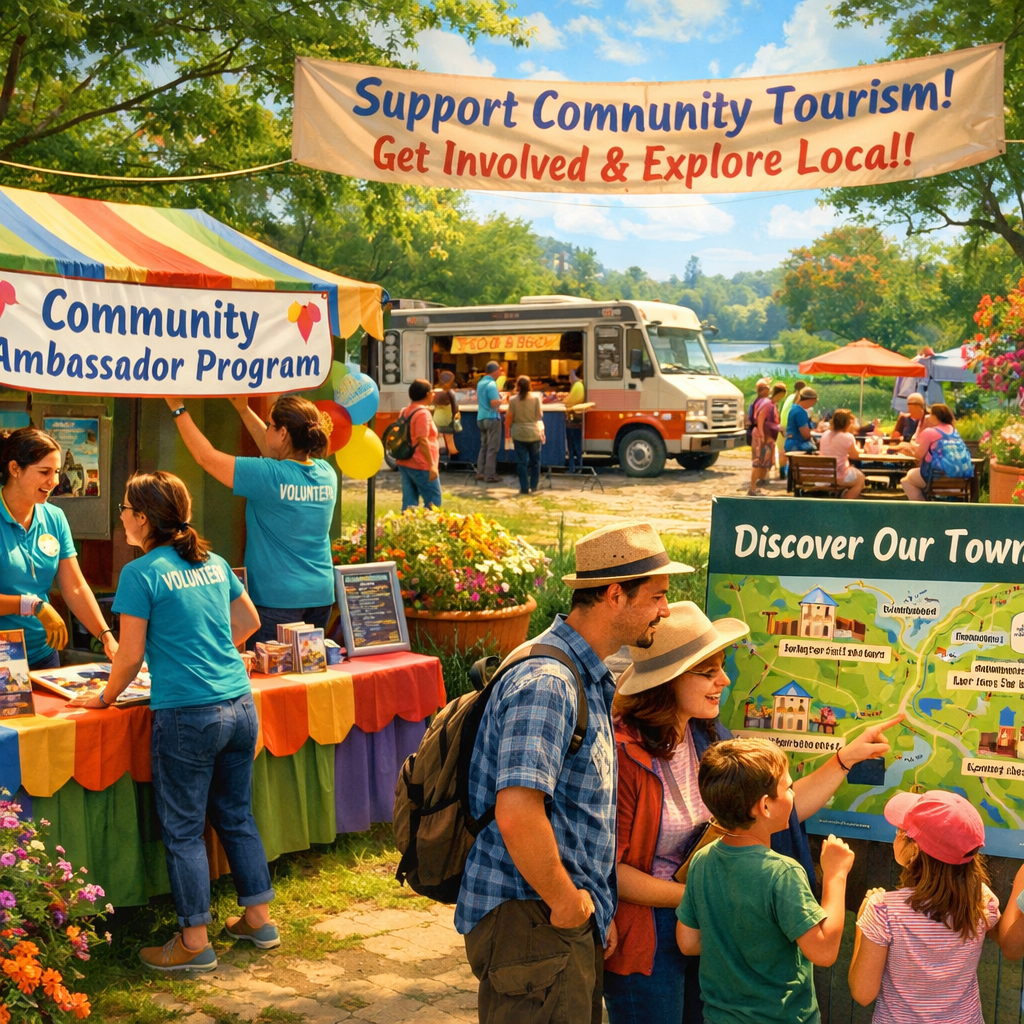
A Guide to Developing a Community Ambassador Program for Tourism Destinations
A Guide to Developing a Community Ambassador Program for Tourism Destinations
Communities shape tourism long before visitors step into a hotel, attraction, or visitor center. Every conversation at a coffee shop, airport, retail store, restaurant, or community event contributes to the visitor experience.
That reality is changing how destination organizations, CVBs, and tourism boards approach tourism marketing and workforce development.
Rather than relying exclusively on advertising campaigns, many destinations are investing in community ambassador programs that educate, inspire, and empower residents and frontline workers to become informed advocates for their communities.
Done well, these programs create stronger visitor experiences, improve resident sentiment, support workforce development, and strengthen destination reputation.
This guide explores how tourism organizations can build impactful community ambassador programs that create lasting value for both visitors and residents.
What Is a Community Ambassador Program?
A tourism community ambassador program is a structured educational initiative designed to help residents, frontline employees, students, volunteers, and local businesses better understand and support their destination.
Programs often include training around:
- Local attractions and experiences
- Tourism’s economic impact
- Community storytelling
- Customer service and hospitality
- Accessibility and inclusivity
- Sustainability initiatives
- Events and festivals
- Visitor engagement strategies
- Destination tools and resources
The purpose is not simply to teach facts.
The goal is to build confidence, pride, empathy, and stronger community connections.
Why Community Ambassador Programs Matter
Tourism organizations face increasing pressure to:
- Improve visitor experiences
- Address workforce shortages
- Increase resident support for tourism
- Strengthen destination reputation
- Encourage repeat visitation
- Differentiate their destination authentically
A strong ambassador program can support all of these objectives simultaneously.
When community members understand tourism’s value and feel connected to the destination’s story, they naturally become better advocates.
Participants frequently report increased confidence in welcoming visitors and recommending experiences.
One participant in a Lexington tourism training program shared:
“The program gave me additional resources and deepened my appreciation for what Lexington and the Bluegrass region have to offer.”
Another participant from the Poconos explained:
“I feel much more confident in my ability to create exciting experiences for visitors.”
Those small shifts in confidence can create enormous ripple effects across a destination.
Step 1: Define the Purpose of Your Program
Before building content or recruiting participants, define what success looks like.
Many destinations launch ambassador programs with goals such as:
- Increasing local pride
- Improving customer service
- Educating residents about tourism’s economic value
- Supporting workforce development
- Encouraging advocacy and positive word-of-mouth
- Strengthening community engagement
- Enhancing accessibility awareness
- Improving visitor satisfaction scores
Your goals will shape every part of the program design.
For example:
- A workforce-focused program may prioritize hospitality skills and career pathways.
- A resident engagement program may focus more heavily on community storytelling and tourism economics.
- A rural destination may emphasize outdoor recreation and regional partnerships.
- An urban destination may focus on transportation, neighborhoods, arts, and cultural experiences.
The strongest programs align directly with the broader destination strategy.
Step 2: Identify Your Audiences
Community ambassador programs work best when they reach the people who interact most often with visitors.
Common participant groups include:
- Hotel staff
- Restaurant employees
- Airport teams
- Retail associates
- Tour guides
- Transportation providers
- Students
- Volunteers
- Local government staff
- Residents
- Community organizations
Many successful destinations also include:
- Healthcare workers
- Rideshare drivers
- Campground staff
- Brewery and winery employees
- Real estate professionals
- Event volunteers
Every interaction matters.
One airport employee who completed a tourism training program shared:
“This course was valuable as part of my customer service training. I learned about the diverse restaurant choices, the parking available at the Visitor Center, and the different types of horse farm tours.”
Frontline confidence directly impacts visitor perception.
Step 3: Build Content That Inspires, Not Just Informs
Many training programs fail because they overwhelm participants with information instead of creating emotional connection.
The best tourism ambassador programs blend:
- Practical knowledge
- Storytelling
- Pride of place
- Empathy
- Human-centered hospitality
Strong content often includes:
Tourism’s Economic Impact
Help participants understand:
- Jobs supported by tourism
- Local tax revenue generated
- Small businesses impacted
- Community investments supported by visitors
When residents understand tourism’s role in sustaining the community, support often increases.
Local Experiences & Hidden Gems
Teach participants about:
- Attractions
- Dining
- Outdoor recreation
- Arts and culture
- Seasonal events
- Self-guided tours
- Family-friendly activities
Many participants discover experiences they never knew existed in their own communities.
One participant shared:
“I learned about self-guided tours like the Mural Tour. The VisitLEX website is such a great resource for visitors and locals alike.”
Accessibility & Inclusion
Modern visitors expect inclusive experiences.
Training should include:
- Accessibility awareness
- Inclusive communication
- Welcoming diverse audiences
- Understanding traveler needs
This improves both visitor satisfaction and community culture.
Visitor Engagement Skills
Teach ambassadors how to:
- Make recommendations confidently
- Listen actively
- Solve visitor problems
- Create memorable interactions
- Personalize experiences
Tourism is emotional. Training should reflect that reality.
Step 4: Make Learning Flexible and Accessible
Frontline workers are busy.
Complicated or time-intensive training creates participation barriers.
Modern tourism training programs work best when they are:
- Mobile-friendly
- Self-paced
- Available on demand
- Easy to update
- Multimedia-driven
- Accessible in multiple languages
Shorter learning modules typically increase completion rates and engagement.
Some destinations also combine:
- Online learning
- Live kickoff events
- Group discussions
- Trivia competitions
- In-person experiences
- Familiarization tours
Blended learning often creates stronger community connection.
Step 5: Create Recognition and Momentum
Recognition helps programs gain visibility and long-term engagement.
Successful destinations often provide:
- Digital badges
- Certificates of completion
- Social media graphics
- Ambassador directories
- Networking opportunities
- Continuing education opportunities
- Exclusive local experiences
Recognition transforms participation into identity.
Participants begin seeing themselves as advocates for the destination.
Step 6: Measure Outcomes
A community ambassador program should support measurable destination goals.
Potential metrics include:
- Course enrollments
- Completion rates
- Participant satisfaction
- Visitor satisfaction scores
- Resident sentiment
- Business participation
- Workforce retention
- Social media engagement
- Referral traffic to destination websites
Qualitative feedback also matters.
One participant explained:
“I learned more about VisitLEX’s composition, its goals, and the variety of restaurants and activities in the area. Keep up the great work!”
Comments like these demonstrate stronger destination awareness and engagement.
Common Mistakes to Avoid
Treating Training Like a Memorization Exercise
Facts alone rarely inspire advocacy.
Focus on emotional connection and confidence-building.
Ignoring Frontline Perspectives
Participants often have valuable insights about visitor needs and challenges.
Create opportunities for feedback and collaboration.
Making the Program Too Long
Short, engaging learning experiences outperform overly complex training.
Forgetting Community Identity
Your program should reflect local culture, values, and personality.
Authenticity matters.
The Future of Destination Marketing Is Human
Visitors increasingly value authentic local connection over polished marketing campaigns.
They remember:
- Helpful conversations
- Genuine recommendations
- Warm welcomes
- Shared stories
- Human interaction
That means your destination brand is shaped daily by the people who live and work there.
Community ambassador programs help destinations align those interactions with their values, visitor experience goals, and long-term vision.
The most successful destinations are not simply marketing to visitors.
They are empowering communities to participate in tourism’s success.
About Learn Tourism the nonprofit academy...
Learn Tourism is a 501c3 nonprofit organization dedicated to advancing the tourism industry through innovative educational practices and professional development initiatives. Our mission is to harness the power of science, business psychology, and adult education to build sustainable economies and enrich the tourism landscape.