
One of the Most Expensive Mistakes in Tourism Today
Organizations spend millions attracting customers, developing products, redesigning websites, and launching marketing campaigns. Then they leave the most important part of the customer experience to chance: the human interaction.
That may be one of the most expensive mistakes in business today.
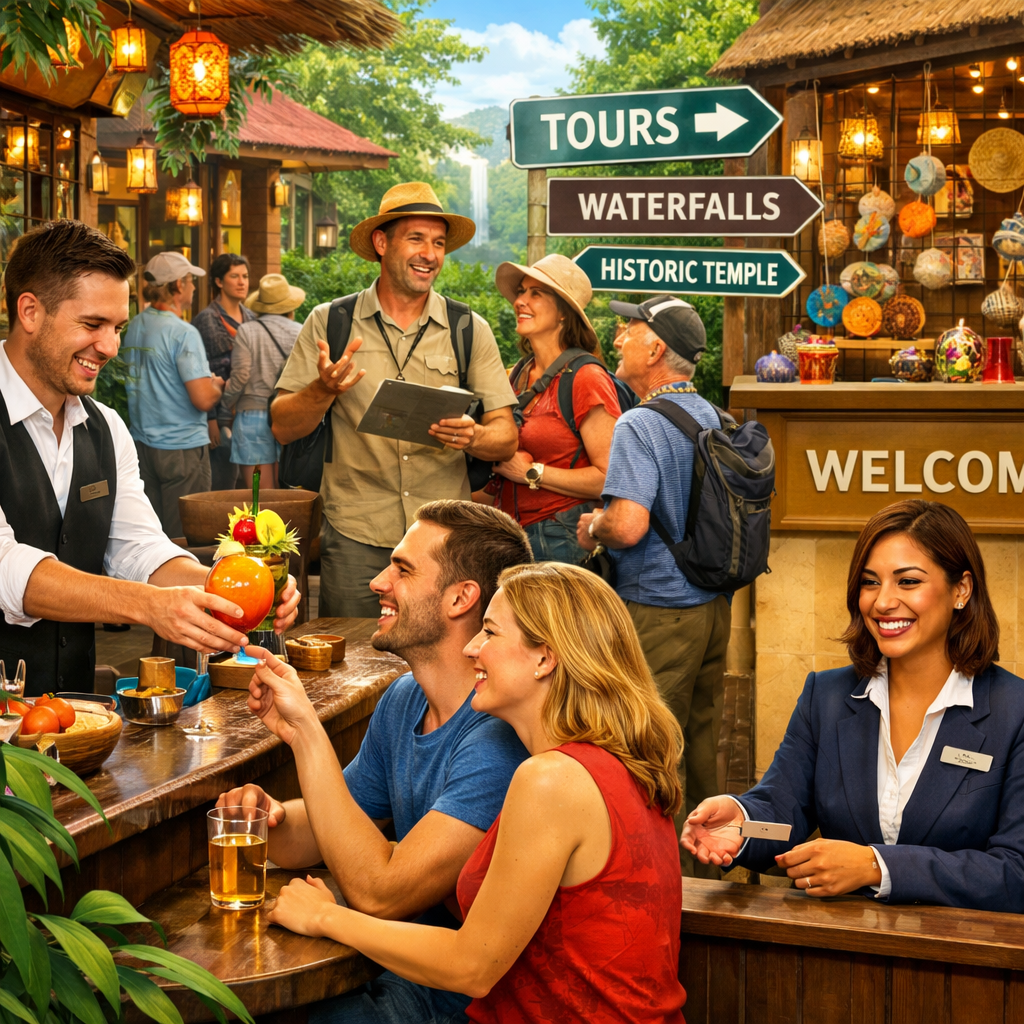
In tourism, hospitality, and destination marketing, costs are even higher. A visitor rarely remembers your organizational chart, strategic plan, or advertising budget. They remember the bartender who recommended a hidden local gem. The hotel front desk associate who welcomed them with empathy after a delayed flight. The retail worker who confidently answered a question instead of shrugging. The tour guide told a story instead of reciting facts.
Experiences are shaped by people.
And people need more than information. They need education designed to build confidence, foster empathy, promote behavior change, and support real-world application.
Information Isn’t the Same as Learning
Many organizations still approach training as a checkbox exercise. A handbook. A PowerPoint. A login nobody finishes. A binder full of facts that employees are expected to memorize.
That approach is costly.
Research from the Learning Guild and adult education experts consistently shows that adults retain information more effectively when learning is interactive, emotionally relevant, and connected to practical application. Yet too many tourism training programs still prioritize memorization over meaningful engagement.
The result?
- Frontline workers feel unsupported
- Community members feel disconnected
- Visitor experiences become inconsistent
- Employee confidence drops
- Turnover increases
- Opportunities for destination storytelling disappear
The irony is painful: organizations invest heavily in marketing their destination while underinvesting in the people delivering the experience.
Tourism Ambassador Programs Should Build Confidence, Not Just Knowledge
The best tourism ambassador programs do not simply teach where attractions are located.
They teach people why their role matters.
They help participants understand:
- The economic and social impact of tourism
- How to create welcoming interactions
- How to respond with empathy
- How to tell authentic local stories
- How to connect visitors to meaningful experiences
- How to navigate accessibility and inclusion
- How to confidently access resources when needed
That last point matters more than most organizations realize.
Visitors do not expect every frontline employee to memorize every restaurant, trail, event, and attraction. They expect authenticity, curiosity, and confidence in helping them find answers.
That is a completely different training philosophy.
Education With Empathy Changes Outcomes
Empathy is not “soft.” It is operationally valuable.
When someone feels welcomed, understood, and cared for, they stay longer, spend more, leave stronger reviews, and are more likely to return. They become advocates for your destination.
That kind of visitor experience rarely happens accidentally.
It happens when organizations intentionally build cultures of learning.
At Learn Tourism, we’ve seen firsthand how education rooted in empathy transforms destinations, organizations, and communities. Participants consistently report feeling more confident, informed, and connected after completing tourism ambassador and workforce development programs.
One participant in the Poconos Ambassador Program shared:
“I feel much more confident in my ability to create exciting experiences for visitors. The course was comprehensive, and I feel much more prepared to share my knowledge about the Poconos.”
Another participant in Lexington’s Destination LEXpert program noted:
“This course broadened my knowledge of local resources and how to promote them.”
Confidence creates action. Action creates better experiences.
The Hidden Cost of Poor Training
The true cost of ineffective training rarely appears neatly on a balance sheet.
It shows up as:
- Missed visitor spending
- Negative reviews
- Community disengagement
- Staff burnout
- Higher turnover
- Poor accessibility experiences
- Inconsistent messaging
- Weak local pride
- Lost repeat visitation
Meanwhile, organizations that invest in meaningful learning often discover unexpected benefits:
- Stronger cross-sector collaboration
- Increased employee retention
- Better customer satisfaction
- Greater local advocacy
- More resilient tourism economies
- Improved destination reputation
Training is not overhead.
It is infrastructure.
Modern Learning Requires More Than a Course
Effective tourism education today requires strategy, psychology, technology, storytelling, and instructional expertise working together.
That’s why Learn Tourism’s scope of service extends far beyond simply “creating courses.”
Our work includes:
- Custom instructional design
- Tourism ambassador programs
- Learning management technology
- Multilingual learning experiences
- Adult learning strategy
- Accessibility-focused education
- Workforce development programs
- Professional speakers and facilitators
- Subject matter expert collaboration
- Gamification and engagement tools
- Learning analytics and reporting dashboards
- Tourism workforce certifications and continuing education
- Community engagement initiatives
- Online, hybrid, and in-person learning experiences
We combine tourism expertise with adult education science, behavioral psychology, and instructional design methodologies to create learning experiences that actually drive outcomes.
Because the goal is not completion rates.
The goal is transformation.
The Organizations That Win Will Be the Ones That Learn
Destinations, attractions, and tourism businesses are competing in an experience economy. Technology can help. Marketing matters. Branding matters.
But human connection remains the differentiator.
Organizations that prioritize education, empathy, and professional development will create stronger cultures, stronger visitor experiences, and stronger communities.
The organizations that ignore learning?
They may save money in the short term.
But they often pay for it everywhere else.

About Learn Tourism the nonprofit academy...
Learn Tourism is a 501c3 nonprofit organization dedicated to advancing the tourism industry through innovative educational practices and professional development initiatives. Our mission is to harness the power of science, business psychology, and adult education to build sustainable economies and enrich the tourism landscape.