
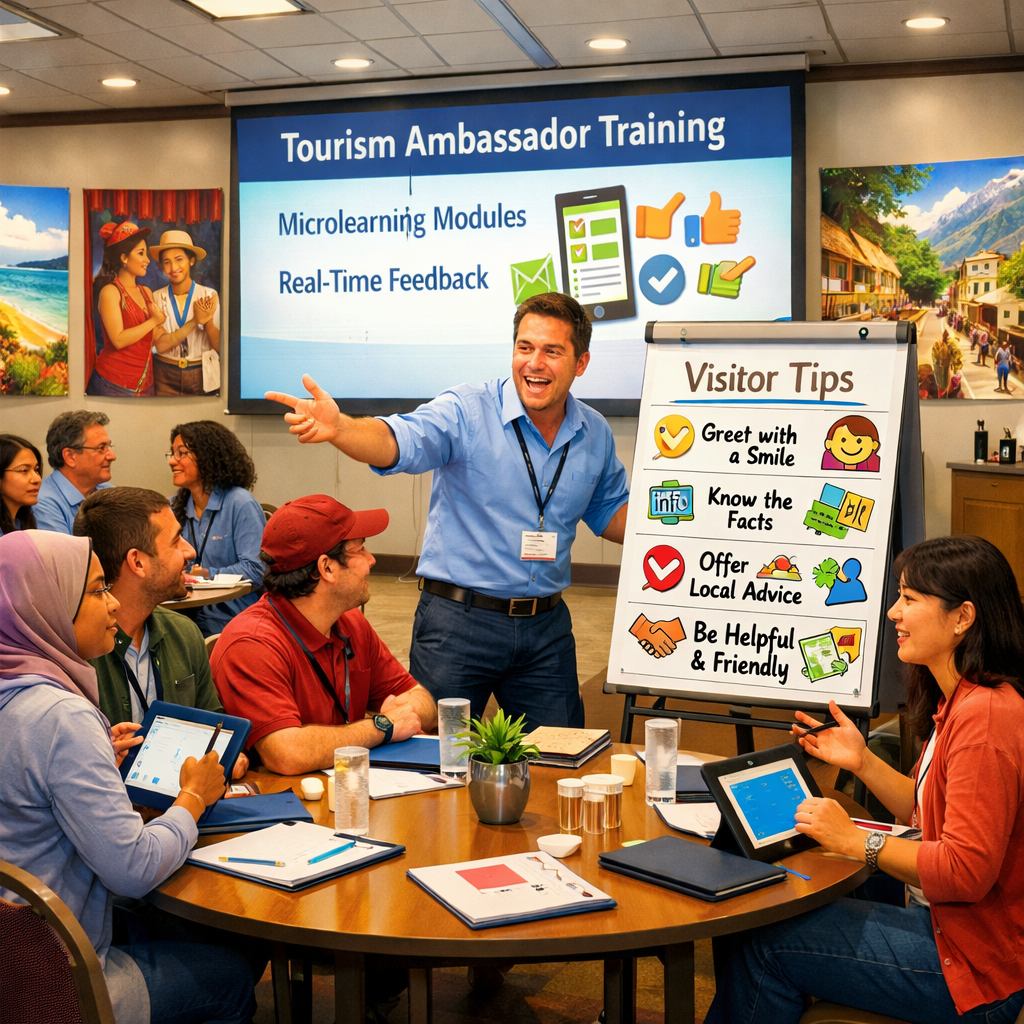
How Tourism Ambassador Training Improves Frontline Service
How Tourism Ambassador Training Improves Frontline Service
Every visitor interaction shapes a destination’s reputation. One warm welcome at a hotel front desk, one thoughtful recommendation from a retail associate, or one helpful conversation at an airport information counter can influence whether a visitor becomes a repeat guest or shares glowing recommendations online.
That’s why more destination marketing organizations are investing in tourism ambassador training programs designed to strengthen frontline service through practical, flexible, and measurable learning experiences.
Traditional workshops and one-time orientations often struggle to create lasting behavior change. Frontline teams are busy, turnover rates remain high across hospitality sectors, and information overload can make retention difficult. Modern tourism ambassador training programs solve these challenges by combining microlearning, on-the-job coaching, and real-time feedback dashboards that reinforce learning continuously instead of treating training as a one-time event.
When done effectively, these programs improve visitor experience outcomes, increase employee confidence, and create stronger tourism hospitality interactions across the entire destination ecosystem.
Why Frontline Service Matters More Than Ever
Visitor expectations continue to rise. Travelers want authentic recommendations, fast answers, inclusive experiences, and meaningful local connections. A single poor interaction can quickly become a negative review shared across social media and travel platforms.
At the same time, frontline staff training in tourism faces growing challenges:
- Staff shortages and seasonal workforce fluctuations
- Limited training time for hospitality employees
- Inconsistent messaging across businesses
- Rapidly changing visitor information
- Diverse visitor needs and accessibility expectations
Tourism ambassador training programs help destinations create consistency while empowering staff to personalize interactions.
Instead of memorizing scripts, destination ambassadors learn how to confidently guide conversations, solve visitor problems, and create memorable moments that reflect the destination’s values and personality.
Step 1: Build Learning Around Microlearning Principles
Microlearning is one of the most effective strategies for adult learners working in fast-paced tourism environments.
Rather than requiring employees to sit through long classroom sessions, modern tourism ambassador training programs deliver short, focused lessons that can be completed in just a few minutes.
These bite-sized modules typically include:
- Local attraction highlights
- Accessibility and inclusion guidance
- Visitor communication techniques
- Event and seasonal updates
- Customer service in tourism best practices
- Destination storytelling strategies
- Conflict resolution techniques
- Cultural awareness and empathy training
Research from the Journal of Applied Psychology has shown that spaced learning improves retention significantly compared to single-session instruction. That matters in tourism environments where staff must apply information immediately during real-world interactions.
Microlearning also supports mobile-friendly learning, allowing staff to complete training during slower shifts, onboarding periods, or between tasks.
For destination marketing organizations, this approach creates a scalable and sustainable training ecosystem.
Step 2: Reinforce Learning Through On-the-Job Coaching
Learning sticks when employees receive reinforcement in real situations.
The strongest tourism ambassador training programs pair digital learning with ongoing coaching from supervisors, peers, and organizational champions.
This coaching model transforms training from passive content consumption into active behavioral development.
Examples include:
Observation-Based Coaching
Managers observe visitor interactions and provide immediate feedback about:
- Greeting techniques
- Recommendation quality
- Listening skills
- Accessibility awareness
- Emotional intelligence
- Problem-solving effectiveness
Peer Learning
Experienced destination ambassadors mentor newer employees by modeling successful tourism hospitality interactions.
Scenario-Based Practice
Short role-playing exercises help staff practice difficult situations such as:
- Managing frustrated visitors
- Recommending activities during bad weather
- Supporting travelers with accessibility needs
- Handling language barriers
- Redirecting unrealistic expectations
This real-world reinforcement dramatically improves confidence.
One participant from the Poconos Ambassador Program shared:
“I feel much more confident in my ability to create exciting experiences for visitors.”
Another learner noted:
“This course helped me feel more confident in welcoming visitors to the Poconos.”
Confidence is one of the most important predictors of strong visitor engagement. Employees who feel prepared are more likely to initiate conversations, offer personalized recommendations, and create memorable experiences.
Step 3: Use Real-Time Feedback Dashboards to Measure Behavior Change
One of the biggest weaknesses in traditional frontline staff training is the lack of measurable outcomes.
Many organizations track completion rates but fail to measure whether behaviors actually improve.
Modern tourism ambassador training programs solve this problem through real-time dashboards and analytics.
These systems allow destination leaders to monitor:
- Course completion trends
- Engagement rates
- Knowledge retention
- Learner confidence levels
- Quiz and assessment performance
- Team participation by organization or department
- Feedback trends over time
- Behavioral indicators tied to visitor satisfaction
This data enables workforce trainers to continuously improve programming and quickly identify knowledge gaps.
For example, if dashboard data shows low confidence around accessibility conversations, destinations can rapidly deploy additional microlearning modules or coaching activities.
Real-time feedback systems also help justify funding and demonstrate ROI to stakeholders.
Instead of simply saying training occurred, destinations can demonstrate measurable improvements in:
- Visitor satisfaction
- Employee engagement
- Local knowledge retention
- Referral recommendations
- Tourism advocacy
- Guest sentiment
Step 4: Create Destination-Wide Consistency
Visitors rarely distinguish between individual tourism businesses. They evaluate the destination as a whole.
That means inconsistent service across hotels, restaurants, attractions, airports, transportation providers, and retailers can damage the overall visitor experience.
Tourism ambassador training programs help align messaging and service standards across the entire destination ecosystem.
Effective programs create shared understanding around:
- Destination values
- Brand voice
- Key attractions
- Accessibility resources
- Visitor expectations
- Community pride
- Responsible tourism practices
Participants often discover new resources and information they can immediately apply during visitor conversations.
One learner in the Destination LEXpert program shared:
“The VisitLex website is such a great resource for visitors and locals alike. Highly recommend this program!”
Another participant noted:
“I learned about the tools available to exceed visitor expectations.”
These insights reinforce an important reality: strong destination ambassadors are not simply information providers. They become enthusiastic local advocates who help visitors feel connected to the community.
Step 5: Make Training Continuous Instead of One-and-Done
Tourism changes constantly.
New attractions open. Events evolve. Seasonal campaigns shift. Accessibility resources expand. Visitor expectations change.
That’s why the most successful tourism ambassador training programs operate as ongoing learning ecosystems rather than static annual courses.
Continuous learning models may include:
- Monthly microlearning refreshers
- Seasonal updates
- Weekly destination tips
- Live virtual workshops
- Community spotlights
- Recognition programs
- Gamification and leaderboards
- Short coaching prompts for supervisors
Ongoing engagement keeps information fresh while maintaining momentum.
This approach also supports employee retention by helping frontline workers feel invested in and valued.
According to LinkedIn Learning’s Workplace Learning Report, organizations with strong learning cultures consistently see higher employee engagement and retention rates.
In tourism, where turnover can create service inconsistency, continuous learning becomes both a workforce development strategy and a visitor experience strategy.
Step 6: Empower Staff to Tell Better Stories
Facts alone do not create memorable experiences.
Stories do.
Strong tourism ambassador training programs help employees move beyond transactional interactions toward emotionally engaging conversations.
Instead of simply providing directions, destination ambassadors learn how to:
- Share local stories
- Recommend hidden gems
- Connect visitor interests to experiences
- Create emotional connections
- Personalize recommendations
Storytelling transforms customer service in tourism from functional to memorable.
A visitor asking for a restaurant recommendation doesn’t just want a nearby option. They want confidence that the recommendation reflects the local culture and fits their interests.
This human-centered approach strengthens both visitor satisfaction and destination loyalty.
Step 7: Support Accessibility and Inclusion
Inclusive hospitality is no longer optional.
Visitors increasingly expect destinations to provide accessible and welcoming experiences for people of all backgrounds and abilities.
Tourism ambassador training programs can play a critical role in helping frontline teams build awareness and confidence.
Topics often include:
- Accessible attractions and transportation
- Inclusive language practices
- Serving neurodiverse travelers
- Cultural competency
- Bias awareness
- Emotional intelligence
- Empathetic communication
One Destination LEXpert participant highlighted the value of accessibility training by sharing:
“The information about accessibility resources and businesses offering accessibility services was also extremely helpful.”
Inclusive service training improves not only visitor outcomes but also community trust and destination reputation.
Step 8: Celebrate Success and Recognize Participation
Recognition reinforces learning.
Many successful tourism ambassador training programs incorporate:
- Digital badges
- Graduation certificates
- Public recognition
- Team leaderboards
- Community celebrations
- Ambassador spotlights
Recognition helps participants feel proud of their role in shaping the destination experience.
It also encourages continued engagement and peer participation.
Most importantly, recognition reinforces the idea that frontline workers are not “just staff.” They are essential contributors to the local economy and community identity.
The Long-Term Impact of Tourism Ambassador Training Programs
Destinations that invest in frontline staff training consistently create stronger, more resilient visitor economies.
Effective tourism ambassador training programs produce long-term benefits such as:
- Improved visitor experience scores
- Increased repeat visitation
- Stronger online reviews
- Higher employee confidence
- Greater local pride
- Improved cross-industry collaboration
- Better accessibility outcomes
- More authentic tourism hospitality interactions
The most important result, however, is cultural.
When communities invest in learning, they create environments where hospitality becomes part of the destination identity itself.
That transformation doesn’t happen through one seminar or handbook.
It happens through continuous learning, supportive coaching, measurable feedback, and a shared commitment to creating exceptional visitor experiences.
Final Thoughts
Tourism ambassador training programs are no longer “nice to have” initiatives.
They are strategic workforce development tools that directly influence visitor satisfaction, economic impact, and destination reputation.
By combining microlearning, coaching, and real-time feedback dashboards, destination marketing organizations can create measurable behavior change that improves frontline service across the visitor journey.
The future of visitor experience belongs to destinations that invest in people.
And the destinations that prioritize learning today will create stronger tourism economies tomorrow.
About Learn Tourism the nonprofit academy...
Learn Tourism is a 501c3 nonprofit organization dedicated to advancing the tourism industry through innovative educational practices and professional development initiatives. Our mission is to harness the power of science, business psychology, and adult education to build sustainable economies and enrich the tourism landscape. Visit us at learntourism.org.