
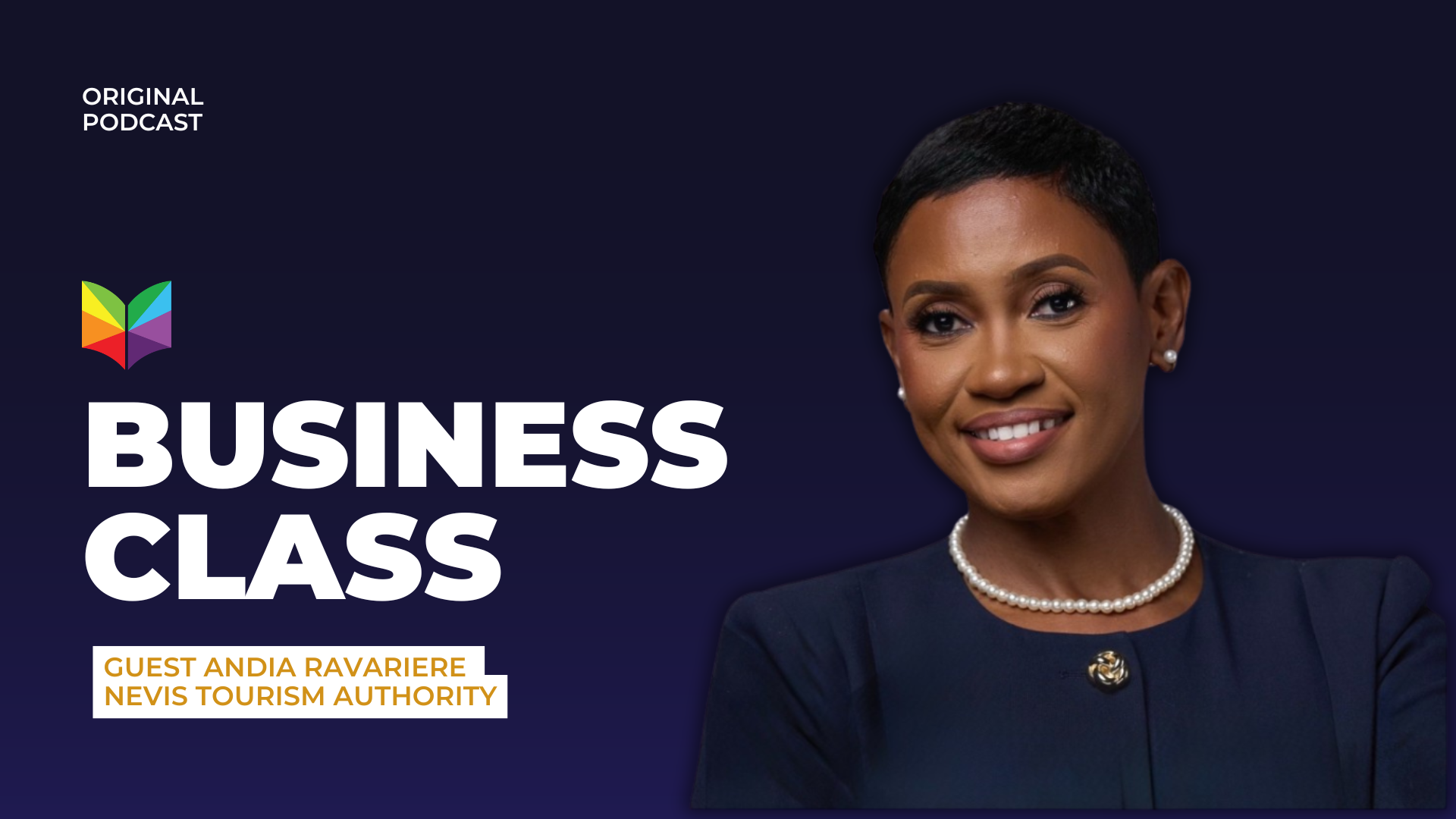
Barefoot Luxury & Bold Leadership with Andia Ravariere of Nevis
Tourism leaders across the globe are facing an important question:
How do destinations create meaningful visitor experiences while protecting culture, empowering communities, and preserving authenticity?
That question was at the center of a recent Business Class conversation with Andia Ravariere, CEO of the Nevis Tourism Authority.
Throughout the discussion, Andia shared thoughtful perspectives on tourism leadership, sustainable destination development, Caribbean collaboration, and the role tourism can play in improving livelihoods across island communities.
Every Destination Has a Spirit
One of the most compelling ideas from the conversation was Andia’s belief that every destination possesses its own unique identity and energy.
“It’s as if the island is speaking to you,” she explained while describing her approach to destination marketing.
That philosophy shapes how she approaches tourism leadership in Nevis. Rather than attempting to position the island as everything for everyone, Nevis focuses on attracting visitors who appreciate the destination’s authentic character.
Andia describes Nevis as:
- Sophisticated
- Elegant
- Welcoming
- Authentic
- Full of life
- Peaceful
This approach reflects an important shift happening throughout tourism marketing today.
Successful destinations are moving away from mass-market messaging and instead embracing their distinct identity, culture, and values.
Authentic Experiences Require Local Voices
One of the strongest themes throughout the episode was authenticity.
Andia emphasized that meaningful visitor experiences can only happen when local communities are actively involved in tourism product development.
Whether it’s cultural performances, heritage tours, storytelling, or culinary experiences, she believes visitors want genuine immersion rather than staged experiences created solely for tourists.
“The only way you can get the true essence of any product or any experience is to work closely with the locals within the community,” she shared during the interview.
That philosophy aligns closely with modern destination stewardship strategies and evolving traveler expectations.
Today’s travelers increasingly seek:
- Authentic cultural connection
- Local interaction
- Community storytelling
- Meaningful experiences
- Purpose-driven travel
- Deeper understanding of place
Destinations that empower local voices often create stronger visitor experiences while simultaneously building community pride and economic opportunity.
Tourism as a Vehicle for Sustainable Livelihood Development
Andia’s career has been heavily influenced by her passion for community-based tourism and sustainable development.
Growing up in small island developing states gave her firsthand understanding of tourism’s economic importance throughout the Caribbean.
But rather than focusing purely on visitor numbers, she advocates for tourism strategies that create sustainable livelihoods and entrepreneurial opportunity for local residents.
This distinction matters.
Tourism success should not only be measured by:
- Arrival counts
- Hotel occupancy
- Visitor spending
It should also be evaluated through:
- Community empowerment
- Local business growth
- Cultural preservation
- Resident quality of life
- Long-term sustainability
Andia explained that tourism can create opportunities for residents to become business owners, guides, cultural interpreters, artisans, restaurateurs, and entrepreneurs — not simply employees within the tourism ecosystem.
That mindset reflects a broader evolution happening throughout global tourism development.
Collaboration Over Competition
One particularly fascinating part of the conversation focused on regional collaboration throughout the Caribbean.
Andia believes Caribbean destinations are stronger together than apart.
“There is more power in collaboration than competition and division,” she explained.
Rather than competing aggressively for the same travelers, she envisions multi-destination partnerships where islands collaborate on:
- Luxury travel experiences
- Yachting events
- Golf tournaments
- Shared itineraries
- Cross-promotion
- Regional storytelling
Her work with destinations like Anguilla and St. Barts reflects this vision already taking shape.
This collaborative mindset represents an important lesson for tourism professionals everywhere.
Travelers rarely think in organizational boundaries.
Visitors care about experiences, stories, ease of travel, and emotional connection — not jurisdictional silos.
The destinations and tourism organizations that collaborate effectively may ultimately create stronger visitor experiences and stronger regional economies.
Leadership Means Empowering People
Another standout moment from the conversation centered around leadership philosophy.
Andia emphasized the importance of becoming a leader rather than simply managing people.
For her, success as a CEO includes:
- Empowering employees
- Building healthy workplace culture
- Valuing people individually
- Encouraging growth
- Creating environments where employees feel seen
This people-centered leadership approach is increasingly important throughout tourism and hospitality industries, especially as organizations navigate workforce development and retention challenges.
Strong tourism leadership today requires emotional intelligence, empathy, communication, and trust-building just as much as strategic planning or marketing expertise.
Fear Can Limit Growth
One of the most personal and inspiring sections of the interview focused on fear.
Andia openly discussed overcoming fear throughout her career:
- Fear of public speaking
- Fear of moving to new destinations
- Fear of change
- Fear of opportunity
- Fear of growth itself
Her advice to her younger self was simple:
“Don’t be afraid.”
That message resonates deeply within tourism leadership.
Growth often requires stepping into unfamiliar territory:
- New destinations
- New leadership roles
- New technologies
- New strategies
- New ways of thinking
The willingness to embrace discomfort is often what allows tourism professionals to innovate, lead, and create meaningful impact.
Why Nevis Feels Different
Toward the end of the conversation, Andia described something especially powerful about life in Nevis: peace.
She spoke about feeling safe, balanced, and grounded on the island in a way she had not experienced elsewhere in the Caribbean.
That emotional connection to place may ultimately be one of tourism’s greatest strengths.
The destinations people remember most are rarely defined solely by attractions or amenities.
They are remembered because of:
- How they made people feel
- The people they met
- The stories they heard
- The authenticity they experienced
- The sense of connection they discovered
And perhaps that is exactly what modern tourism should aspire to create.