
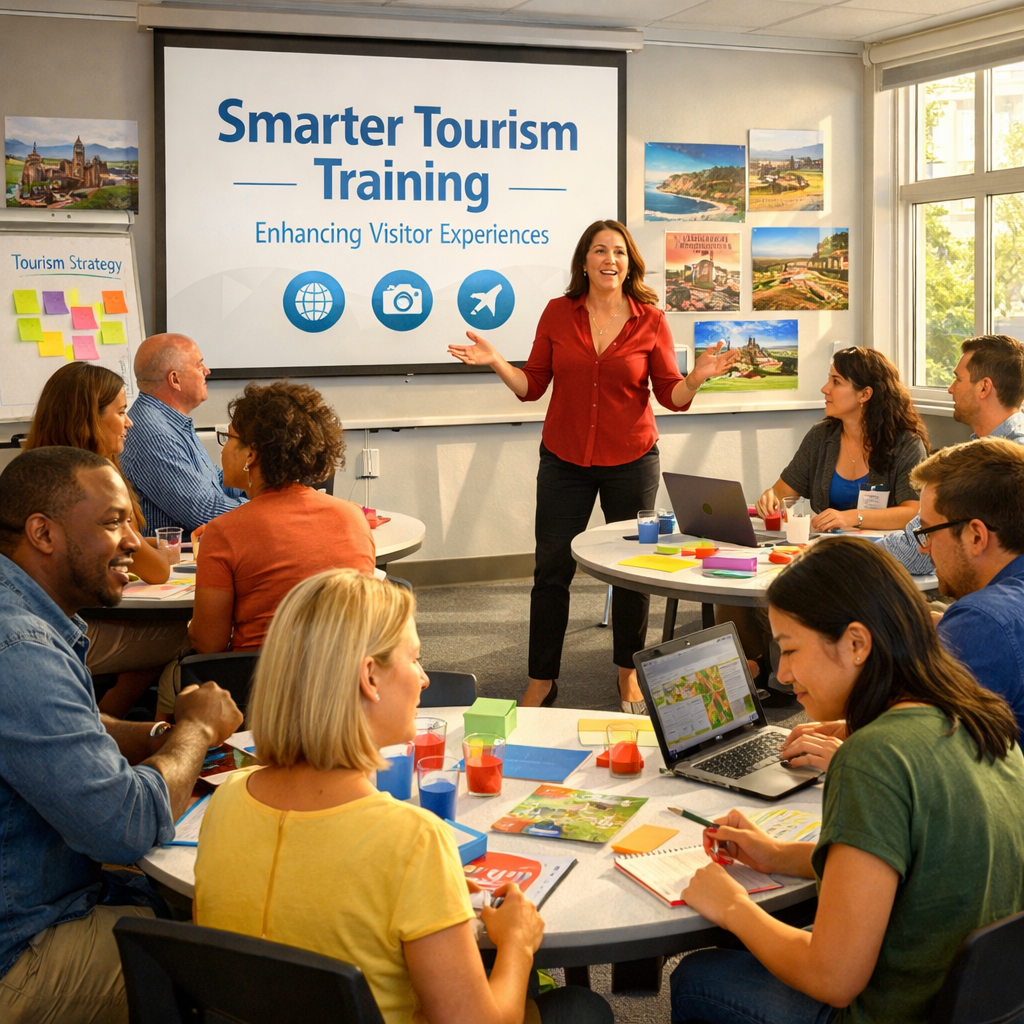
Smarter Tourism Training Starts Here: 5 Shifts That Make the Difference
Why Most Tourism Training Fails (And What High-Performing Destinations Do Instead)
Tourism leaders don’t lack training programs. They lack training that actually works.
That distinction matters more than ever.
Across conversations with destination marketing organizations, a pattern keeps emerging: teams are trained, materials are distributed, courses are completed… and yet behavior doesn’t change.
Visitors still get generic recommendations.
Front-line staff still hesitate.
Community engagement still plateaus.
So what’s going wrong?
The Illusion of Completion
Many programs are designed around a simple metric: completion.
- Did they finish the course?
- Did they pass the quiz?
- Did they receive recognition?
These are easy to measure—but they’re not meaningful outcomes.
Completion doesn’t equal:
- Confidence
- Engagement
- Advocacy
- Revenue impact
In fact, one of the biggest misconceptions in tourism training is that exposure to information automatically leads to action.
It doesn’t.
The Real Gap: Knowing vs. Doing
Think about the difference between these two statements:
- “I know what there is to do in my destination.”
- “I feel confident recommending the perfect experience to this specific visitor.”
That gap is where most training programs fail.
And it’s exactly where high-performing destinations focus their efforts.
What the Best Destinations Understand
The destinations seeing real results from their tourism training initiatives are designing for behavior—not knowledge.
They’re asking:
- Will this help someone respond better in a real conversation?
- Will this make it easier to recommend experiences in the moment?
- Will this create a stronger emotional connection to the destination?
Because at the end of the day, tourism is human.
It’s not about information transfer. It’s about interaction quality.
The 5 Shifts That Change Everything
Here’s what separates high-impact tourism training from everything else:
1. From Content Delivery → to Experience Design
Training isn’t a presentation—it’s an experience.
Interactive elements, storytelling, and real-world scenarios outperform static slides and long-form documents every time.
2. From Memorization → to Resource Navigation
People don’t need to memorize everything. They need to know where to find it—quickly.
Programs that integrate destination websites, tools, and real-time resources create more confident teams.
3. From One-Time Programs → to Ongoing Engagement
Learning shouldn’t stop at completion.
The best destinations build:
- follow-up content
- seasonal updates
- community touchpoints
Because engagement drives retention.
4. From Generic Messaging → to Personalized Relevance
Not every learner plays the same role.
A hotel front desk agent, a barista, and a tour operator all need different perspectives—and the best programs reflect that.
5. From Passive Learning → to Active Participation
Engagement is everything.
When learners:
- make decisions
- explore scenarios
- share ideas
they’re far more likely to change behavior.
What Participants Are Actually Saying
When training works, the feedback shifts in a meaningful way.
Instead of:
- “This was informative.”
You start hearing:
- “I feel more confident welcoming visitors.”
- “I discovered new experiences I can recommend.”
- “I better understand the impact of tourism in my community.”
That language matters.
Because confidence, discovery, and understanding are leading indicators of behavior change.
The Strategic Opportunity Most DMOs Are Missing
Tourism training is often treated as a tactical initiative.
Something to “offer.”
Something to “check off.”
But the most forward-thinking destinations are treating it differently.
They’re using training as a strategic lever to:
- Align community messaging
- Increase visitor satisfaction
- Strengthen local pride
- Support workforce development
- Drive economic impact
In other words, training becomes infrastructure—not just programming.
A Smarter Way Forward
If your current training program isn’t producing the results you want, the answer probably isn’t “more content.”
It’s better design.
Start by asking:
- Are we designing for behavior change or knowledge transfer?
- Are we building confidence or just delivering information?
- Are we creating an experience—or just a course?
The answers to those questions will tell you everything you need to know.
One Final Thought
Visitors don’t remember what your team knows.
They remember how your team made them feel.
And that feeling is shaped in real-time conversations—by people who either feel confident… or don’t.