
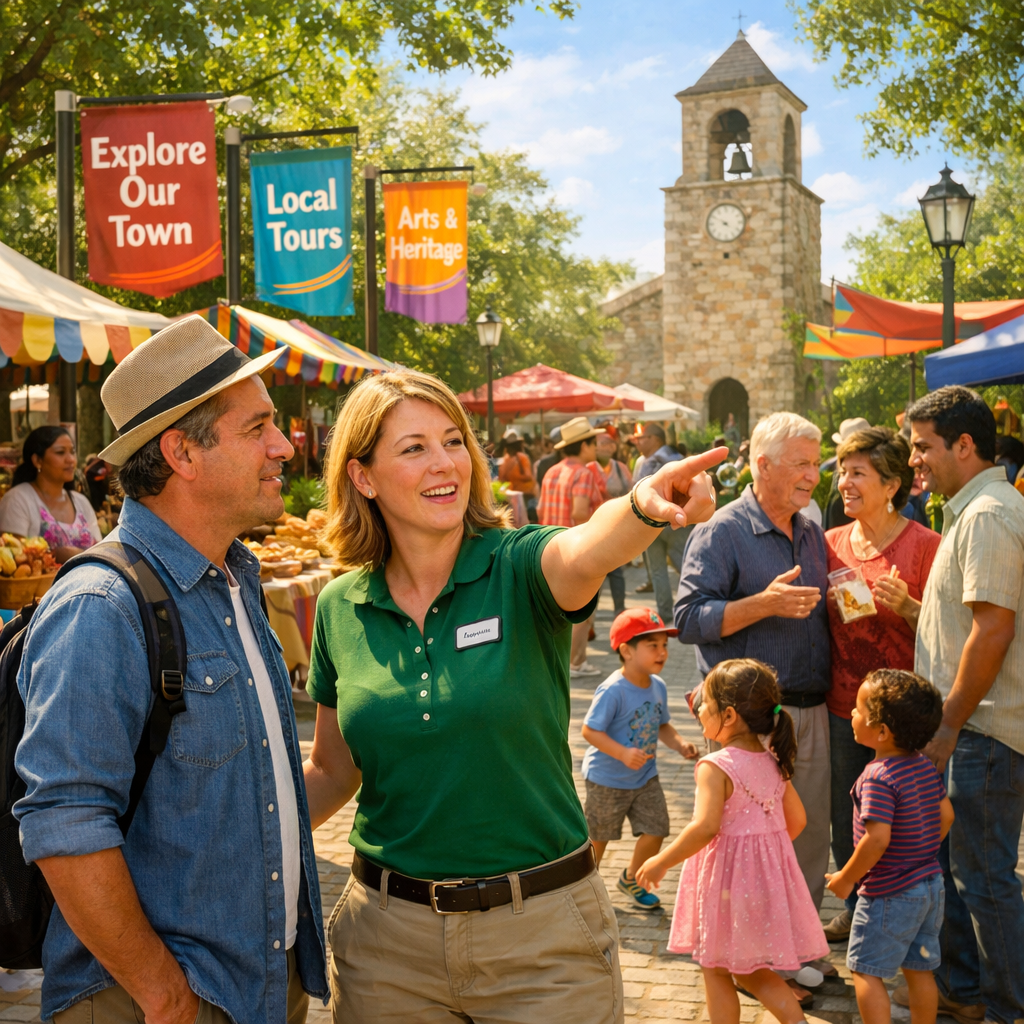
The Real Goal Isn’t Training—It’s Confidence, Connection, and Community Impact
Conversations with destination leaders across the country reveal a shared truth: most aren’t looking for “another training program.” They’re searching for something far more meaningful.
They want engaged communities.
They want confident front-line teams.
They want visitors to feel something—not just see something.
And most importantly, they want results they can actually measure.
What Destination Leaders Are Really Trying to Solve
Across recent conversations, a few consistent challenges keep surfacing:
- Front-line staff don’t feel confident recommending experiences
- Community members don’t fully understand tourism’s value
- Visitors miss out on meaningful, local experiences
- Existing “training” feels outdated, static, or forgettable
- Engagement drops off quickly after programs end
These aren’t content problems. They’re behavior problems.
And behavior doesn’t change with information alone.
The Shift from Information to Transformation
Traditional tourism training often focuses on facts:
- local attractions
- data and statistics
- lists of restaurants
But the leaders you’ve been talking with? They’re aiming higher.
They want people to:
- Tell better stories
- Create emotional connections
- Recommend experiences with confidence
- Represent their community with pride
That’s a completely different outcome.
Research in adult learning consistently shows that people retain only about 10% of what they read but up to 70% of what they actively engage with and apply. That gap explains why so many legacy programs fall short—and why modern tourism training must evolve.
Confidence Is the Currency of Great Visitor Experiences
The most compelling insight from recent programs isn’t about content—it’s about confidence.
Participants repeatedly describe a shift in how they feel:
- “I feel more confident now about my ability to welcome visitors…”
- “I learned so much that I didn’t know!”
- “This program broadened my knowledge… and deepened my appreciation…”
- “I’m definitely more informed now!”
Confidence changes behavior.
Confident staff:
- Make stronger recommendations
- Personalize visitor interactions
- Encourage longer stays and higher spending
- Turn transactions into experiences
And confident communities become advocates—whether you call them ambassadors, champions, or simply proud locals.
What Today’s Most Effective Programs Do Differently
The destinations getting traction right now are embracing a few key principles:
1. Make it relevant, not overwhelming
Short, modular learning beats long manuals every time.
2. Focus on real-world application
“How would you respond?” is more powerful than “What is the answer?”
3. Build pride of place
When people understand tourism’s impact, they engage differently.
4. Provide tools, not just knowledge
Knowing where to find answers is just as important as memorizing them.
5. Keep the relationship going
The best programs don’t end at completion—they evolve into ongoing engagement.
The Hidden Opportunity: Community Alignment
Here’s what many leaders are starting to realize:
Tourism training isn’t just about visitors.
It’s about aligning your entire community around a shared vision:
- What kind of destination are we?
- What experiences do we want to be known for?
- How do we want visitors to feel when they leave?
When training is designed around these questions, it becomes a strategic tool—not just a program.
Where This Is All Headed
The future of tourism training is moving toward:
- Personalized, on-demand learning
- Story-driven content over static information
- Integration with real destination tools and platforms
- Continuous engagement instead of one-time certification
- Measurable behavior change, not just completion rates
Destinations that embrace this shift will see stronger visitor experiences, more engaged communities, and a clearer return on their investment.
Those that don’t will keep wondering why their “trained” teams still hesitate when a visitor asks, “What should I do next?”
A Simple Question to Consider
If every person in your destination—from hotel staff to local business owners—felt genuinely confident recommending experiences…
How different would your visitor experience look?
