
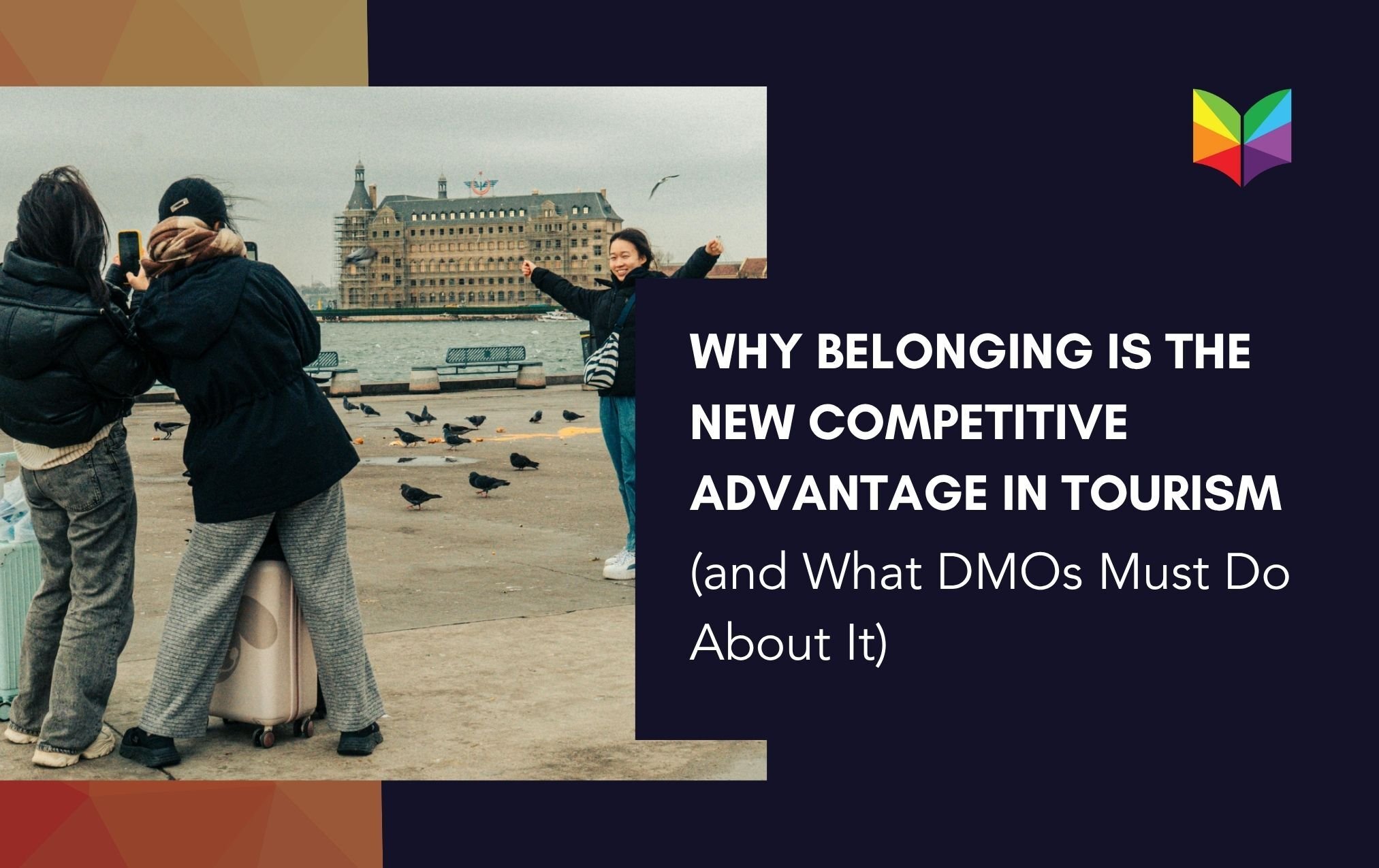
Why Belonging Is the New Competitive Advantage in Tourism (and What DMOs Must Do About It)
Artificial intelligence dominates headlines, conference agendas, and strategic plans. Yet, beneath the excitement of automation and predictive analytics lies a quieter, more urgent challenge for destination leaders: rebuilding trust and fostering a sense of belonging within their own communities.
This is where the real competitive advantage is emerging.
As global platforms become more powerful, more centralized, and more algorithm-driven, destinations have a rare opportunity to differentiate—not through technology alone, but through humanity.
The Growing Gap Between Place and Platform
Technology platforms are designed for scale. They prioritize efficiency, standardization, and global reach. Whether it’s booking engines, review sites, or AI-generated travel recommendations, these systems tend to flatten the uniqueness of places into comparable data points.
Destinations, however, are not data points.
They are lived experiences, shaped by culture, community, and connection.
The widening gap between place and platform creates a paradox:
- Travelers are discovering destinations through increasingly homogenized systems
- Yet, they crave authentic, meaningful, and human experiences more than ever
That tension is where DMOs can win—or lose.
Belonging Is the Differentiator Technology Can’t Replicate
Belonging cannot be automated.
It cannot be scraped, summarized, or generated by AI in a way that truly resonates. It is built through relationships, shared stories, and trust between people.
For DMOs, this means shifting focus:
- From promoting places → to cultivating pride of place
- From attracting visitors → to empowering communities
- From messaging → to meaningful engagement
When communities feel connected to tourism, they become advocates, storytellers, and hosts. When they don’t, friction grows—and no amount of marketing spend can overcome it.
Trust Is the Currency of Modern Tourism
Trust operates on multiple levels:
- Residents trust that tourism benefits their quality of life
- Frontline workers feel confident and valued in their roles
- Visitors believe in the authenticity of their experience
Without trust, tourism becomes transactional. With trust, it becomes transformational.
Programs rooted in tourism training and tourism ambassador development play a critical role here. When individuals understand the impact of tourism and feel equipped to participate, confidence grows.
One participant in a destination training program shared:
“I feel more confident now about my ability to welcome visitors to our area.”
Confidence leads to better experiences. Better experiences lead to stronger reputations. Stronger reputations drive sustainable growth.
The Role of Tourism Training in Building Belonging
Belonging doesn’t happen by accident—it’s designed.
DMOs that invest in structured tourism training programs create alignment across stakeholders:
- Frontline staff gain knowledge and confidence
- Residents understand tourism’s economic and social impact
- Local businesses become more engaged in storytelling
This is where Learn Tourism and its approach to tourism certification and professional development stand apart. Training is not just about information—it’s about transformation.
Research from the Association for Talent Development shows that organizations that invest in learning see higher engagement and performance. In tourism, that translates directly into visitor experience and community satisfaction.
From Audiences to Advocates
The future of destination marketing is not about building larger audiences—it’s about cultivating stronger advocates.
Advocates:
- Speak authentically about their community
- Create memorable, human-centered experiences
- Reinforce trust at every touchpoint
This is the essence of modern tourism marketing—not just reaching people, but resonating with them.
And it starts at home.
Practical Steps for DMOs
To close the gap between place and platform, DMOs should focus on three strategic actions:
1. Invest in Community-Centered Learning
Develop scalable, accessible tourism training programs that educate and inspire residents, workers, and partners.
2. Build Shared Narratives
Create opportunities for locals to contribute to the destination story—not just consume it.
3. Measure Belonging, Not Just Visitation
Track engagement, pride, and community sentiment alongside traditional metrics.
The Opportunity Ahead
Technology will continue to evolve. AI will become more powerful. Platforms will grow more dominant.
But destinations that invest in belonging and trust will stand apart.
Because while technology can recommend a place, only people can make it matter.
And in that space—between algorithm and authenticity—lies the future of tourism.

About Learn Tourism the nonprofit academy...
Learn Tourism is a 501c3 nonprofit organization dedicated to advancing the tourism industry through innovative educational practices and professional development initiatives. Our mission is to harness the power of science, business psychology, and adult education to build sustainable economies and enrich the tourism landscape. Visit us at learntourism.org.